Children often face challenges developing logical thinking skills that are essential for problem solving in academic and everyday contexts. Many professionals in education and child development observe that despite access to digital learning tools, young learners still need concrete, hands-on experiences to build foundational reasoning abilities. The gap between digital engagement and tactile learning sometimes hinders the natural development of logic-based skills. Addressing this requires understanding how physical manipulation of objects supports cognitive growth in children. Exploring how kids learn helps educators craft meaningful experiences that connect play with thinking processes.
Through my work in architectural education for children, I’ve witnessed how physical play, such as using building blocks, contributes substantially to developing logical thinking. This approach is more than entertainment; it provides an accessible thinking framework where children experiment, test hypotheses, and reflect on cause and effect relationships. Simple activities with building blocks can nurture spatial reasoning and problem-solving abilities critical for academic subjects like math and science. The practical integration of these activities within learning environments can help bridge persistent developmental gaps.
Key Points Worth Understanding
- Logical thinking grows when children engage with tangible materials in hands-on ways.
- Many educational challenges arise from overreliance on screen-based learning that lacks physical interaction.
- Physical building blocks facilitate cognitive skills through manipulation, trial, and error.
- Structured play linked to real-world concepts can deepen children’s understanding and retention.
- Consistent adult guidance enhances the educational value of block play by encouraging reflection and connection-making.
What challenges do educators face with developing logical thinking through play?
Educators and program coordinators often encounter difficulty balancing curriculum demands with opportunities for hands-on exploration. The pressure to focus on standardized testing results can leave less room for activities centered on physical play, even when such activities support underlying skills, like logic and spatial awareness. Furthermore, not all educational settings have equal access to diverse play materials or training on integrating them strategically. This results in uneven opportunities for children to engage in meaningful, logic-building experiences through physical blocks.
How have traditional education systems influenced play opportunities?
Traditional education has frequently prioritized direct instruction and memorization over exploratory learning. This emphasis limits time for child-led play where logical reasoning naturally develops. When play is regarded merely as recess or downtime rather than a core learning method, it reduces the visibility of its cognitive benefits. Consequently, children may complete lessons without fully engaging their reasoning capacities, affecting their long-term problem-solving skills.
Additionally, standardized assessments rarely measure skills developed through play such as spatial reasoning or design thinking. This creates a gap where educators might undervalue physical play’s role in skill development. A systemic shift to recognize play as an essential educational tool remains a slow process, making it challenging to implement effectively in some schools or programs.
In what ways do limitations on resources affect play-based learning?
Many afterschool programs and classrooms lack sufficient physical materials like building blocks, which constrains options for hands-on logic-focused activities. Budget constraints and competing program priorities mean play materials might be considered secondary. Without quality kits or varied blocks, children have fewer chances to experiment with shapes, balance, and structure, which are key for logical thinking through play.
Access to well-trained instructors who understand how to scaffold block play toward learning goals also varies. Without this guidance, play can remain purely recreational rather than developing critical thinking. Resource limits impact not only what is available but how effectively it is used to enhance reasoning in diverse learner groups.
Why can communication of play’s benefits be difficult to educators and parents?
Despite research supporting play-based learning, some educators and parents may remain skeptical or unclear about its value. Misconceptions view play as unrelated to academic success or discipline. This can reduce support for investment in play programs or materials. Communicating how block play directly teaches logic and problem-solving often requires clear examples and explanations relevant to everyday learning outcomes.
The challenge lies in bridging educational theory with practical understanding. When parents and teachers observe children enjoying blocks without obvious ‘lessons,’ they may underestimate the cognitive processes occurring. Building familiarity with concrete connections between play and logic can shift attitudes over time.
What practical approaches help build logical thinking with physical blocks?
Effective solutions blend purposeful play with explicit reflection and guided challenges. Providing children with varied sets of blocks allows exploration of different shapes and connections, encouraging experimentation. Activities structured around real questions, such as building stable towers or creating symmetrical patterns, promote observation, trial, and adjustment—all key logical skills.
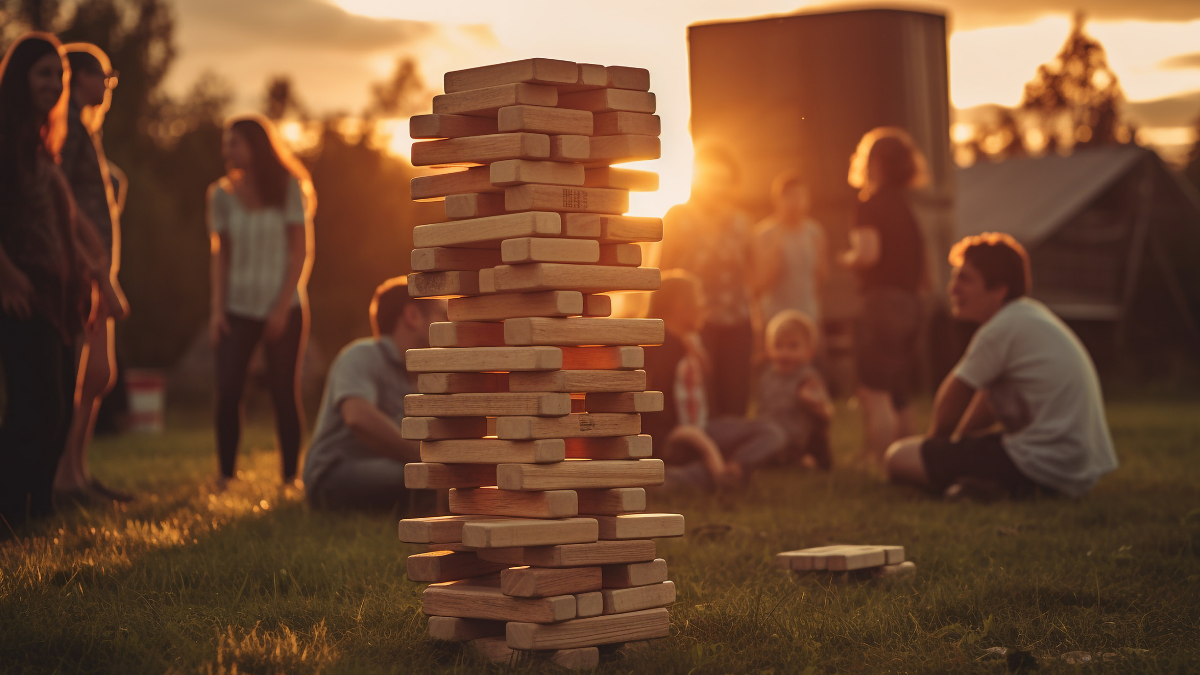
Challenges like tower building foster problem-solving through hands-on activity and illustrate engineering principles in a playful context.
How does connecting play to real-world concepts support learning?
When block activities relate to familiar objects or environments, children apply logic purposefully. For example, designing a simple model house introduces ideas about space and function that encourage sequential thinking and planning. Incorporating storytelling about the building’s use or inhabitants adds context and reasoning about design decisions. Linking play materials to tangible concepts helps sustain attention and deepen understanding.
This relevancy helps children not only play but also reason about why certain designs work better. It strengthens executive skills, like evaluating options and predicting outcomes, beyond simple construction. The connection to everyday experiences makes logical thinking through play more visible and valued by educators and families.
What role does adult facilitation play in enhancing logic through block play?
Adult guidance can support children’s exploration by asking questions, suggesting alternative ideas, and encouraging reflection on successes and failures. Instead of directing, the aim is to prompt children’s thinking processes—asking how a structure remains standing or why certain shapes fit together. This turns play into an active learning experience where children articulate reasoning aloud, reinforcing logic pathways.
Facilitators also model persistence and problem-solving approaches when challenges arise. Their presence provides feedback that propels learning beyond trial and error. Across multiple sessions, consistent facilitation helps children build confidence to tackle new problems independently, supporting sustained growth in logical thinking.
How can integrating other creative disciplines enhance logical skills?
Introducing drawing, measurement, and simple drafting alongside block play connects the hands-on experience to visual literacy and numeric concepts. Children sketch their designs before building, which requires spatial visualization and planning. Measuring blocks and spaces brings practical math into the activity. This integrated approach emphasizes logic applied through multiple modes of thinking.
Opportunities to collaborate during block projects similarly add a social reasoning dimension. Children negotiate ideas and sequences, increasing their ability to approach logical challenges from different perspectives. This holistic integration supports development across cognitive and interpersonal domains.

What steps can educators and parents realistically take to foster logic through block play?
Starting simply by setting aside regular time for unstructured block play is an effective initial step. Ensuring availability of blocks or similar materials at home or school creates a foundation. Encouraging children to describe their building ideas and problem-solving steps helps make thinking visible and supports development.
Programs that combine core academics with project-based block activities provide models of integrating these practices within busy schedules.
Which materials work best for encouraging logic through play?
Blocks of various shapes, sizes, and connection types stimulate different kinds of thinking. Wooden blocks offer tactile feedback and natural variation, encouraging sensory engagement. Interlocking blocks add complexity by requiring planning for stability and fit. Introducing objects like wheels, ramps, or simple tools extends possibilities for cause-effect investigation.
Choosing materials that naturally invite experimentation helps maintain motivation and supports diverse logical challenges. Rotating kits to include new elements can refresh interest and expand skills.
How can families incorporate block play into daily routines?
Families can create inviting play spaces at home that remain accessible. Making block time a regular afterhomework or weekend activity ensures continuity. Inviting siblings or friends to build together offers social interaction and expanded problem-solving scenarios. Parents can join play without directing, asking curious questions that stimulate reflection.
Keeping play pressure-free while encouraging exploration nurtures intrinsic motivation. This balanced approach supports ongoing development of logical thinking without competition or frustration.
What role do schools and afterschool programs hold in this process?
Schools and programs can embed block play within curriculum units by aligning activities with learning goals. Providing staff with training on how to guide play towards logical thinking enhances effectiveness. Scheduling time for creativity and reflection signals value placed on this type of learning among academic priorities.
Collaborations with community organizations or specialists can introduce fresh materials and ideas. Afterschool environments offer a natural setting for hands-on investigations that complement daytime lessons. This layered support structure enables sustained growth in children’s logic skills through meaningful play.
How does professional guidance support effective implementation of play-based logic learning?
Experts familiar with child development and design learning frameworks offer valuable strategies for selecting materials and facilitating play. Professional development helps educators avoid common pitfalls such as underestimating the learning potential or missing opportunities to connect concepts. Advisors can tailor approaches for particular age groups or learning contexts for maximum impact.
Seeking advice from experienced architectural educators provides practical tools and support for instructors and parents alike.
What benefits arise from consulting specialized educators?
Working with specialists brings a broader perspective on how to leverage block play within comprehensive learning plans. They share methods for linking physical play with abstract reasoning and academic standards. Their guidance can help customize activities based on children’s interests and developmental levels, increasing engagement and skill acquisition.
Specialized educators also assist in assessing progress and adapting instruction, ensuring that logical thinking continues to advance. They nurture reflective practices that deepen children’s awareness of their own learning processes through play.
How do experts help programs integrate building blocks into broader curricula?
Professionals assist in mapping block play activities onto subject areas such as math, science, and language arts. They design interdisciplinary projects that enhance relevance and connect cognitive skills with content knowledge. Their input also helps align schedules to balance hands-on exploration with other instructional modes, fostering holistic development.
Guidance in documentation and communication strategies equips educators to share these benefits effectively with parents and administrators. This advocacy supports program sustainability and growth.
What resources and training options do professionals typically provide?
Experts offer workshops, instructional materials, and coaching sessions focused on hands-on learning techniques. They introduce assessment tools suited to capturing growth in logic and spatial reasoning observed through block play. Many provide activity guides, lesson plans, and prompts tailored to workshop or classroom settings.
Access to community forums or professional networks helps educators exchange ideas and troubleshoot challenges. These resources form a foundation for quality implementation and continuous improvement.
Choosing to incorporate physical play with strategic guidance enriches children’s logical thinking development. For families and educators wanting a deeper dive into how children learn through hands-on design experiences, exploring models like the one used at Alpha School’s integrated project blocks can offer useful insights.
Frequently Asked Questions
How do physical building blocks support logical thinking in young children?
Building blocks require children to observe relationships between shapes and spaces, encouraging them to plan, test, and adjust their constructions. These activities promote reasoning about cause and effect, balance, and sequencing, which are foundational aspects of logical thought.
At what age do children benefit most from block play for developing logic?
While block play can engage all ages, it is particularly effective from preschool through elementary years when the brain is highly receptive to spatial and problem-solving skills. Activities can be adapted to match children’s developmental stages to maximize benefit.
Can block play improve skills beyond logic?
Yes, physical play with blocks also enhances fine motor skills, spatial awareness, creativity, and social skills such as collaboration and communication when children play together. It offers a well-rounded developmental experience beyond logical thinking alone.
How can parents encourage block play at home without it becoming chaotic?
Parents can set clear times and defined play areas, organize materials for easy access, and participate in the activities by asking thoughtful questions. Encouraging children to explain their designs helps maintain focus and promotes reflective thinking.
Are digital building apps equivalent to physical blocks for developing logic?
Digital apps provide valuable visual experiences but often lack the tactile feedback and spatial manipulation involved in physical play. Combining both can be complementary, but physical play offers unique benefits for developing fine motor coordination and real-world spatial reasoning.