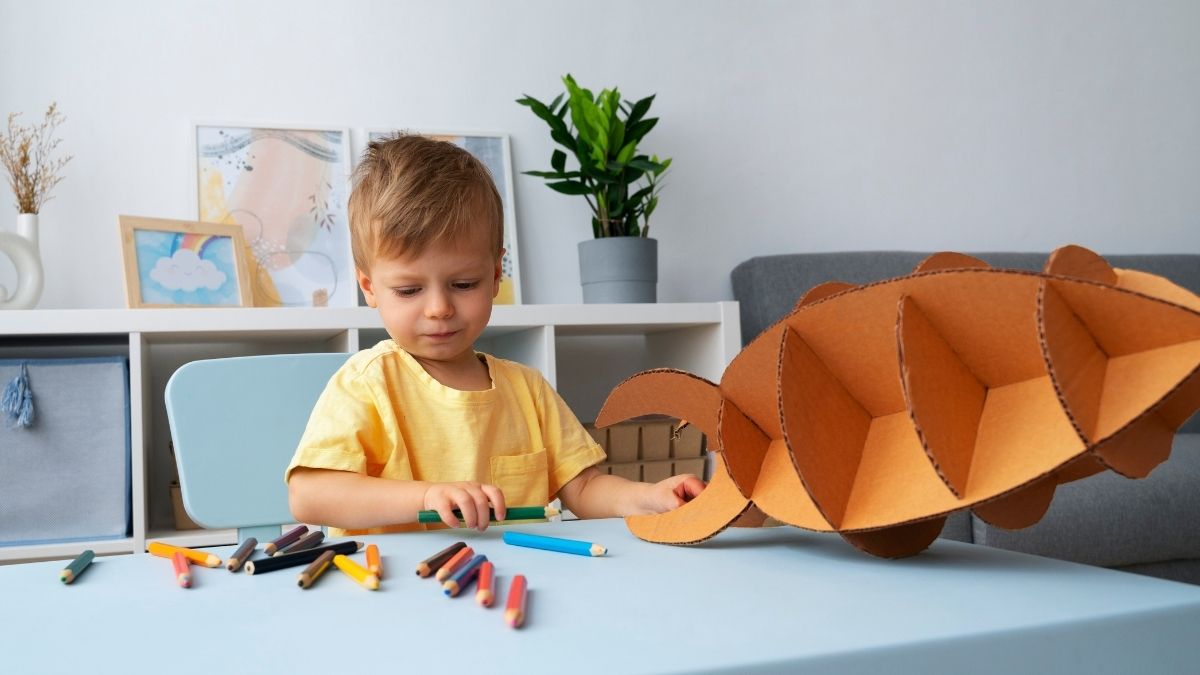
Many middle school students aiming to build a comprehensive DASH portfolio face difficulty showing consistent design and creative thinking skills through the projects they choose. This challenge often arises because portfolios require evidence of both concept development and practical execution, yet finding engaging, developmentally appropriate projects that clearly demonstrate these skills is not straightforward for this age group. Educators and parents supporting learners between 10 and 14 years old often struggle to identify project formats that offer balance between creativity and technical skill building, leading to portfolios that may appear fragmented or lacking depth. Integrating hands-on, architecture-inspired model-making projects can provide tangible outcomes that address portfolio criteria effectively, supporting students in presenting their design thinking with clarity.Connecting abstract concepts and spatial reasoning through physical creation helps strengthen a portfolio by showing both problem-solving and execution abilities within clearly defined projects.
Understanding how these problems persist requires examining the nature of portfolio development at this stage. Middle school students are in a transitional period where conceptual skills are emerging alongside growing dexterity and patience for complex tasks. Many traditional programs lack structures that simultaneously nurture these facets; as a result, portfolios can lean heavily on either simple sketches or unrelated activities. Parents, educators, and program designers often look for practical solutions that bridge conceptual design with hands-on making without overwhelming the learner. arKIDect’s model-making approach emphasizes process-based learning, integrating design thinking and hand skills in project cycles that align with DASH expectations. This approach offers clarity by framing architecture education not just as content knowledge but as a coherent practice that supports portfolio growth meaningfully as children progress in this age group.
Key Points Worth Understanding
- Model-making projects provide visible evidence of design thinking and creativity useful for DASH portfolios.
- Hands-on architecture activities help bridge concept-to-creation gaps often seen in middle school portfolios.
- Developing spatial reasoning through physical projects supports multiple learning styles and strengthens design skills.
- Process documentation within model-making teaches children to communicate their design journey effectively.
- Guided project-based learning ensures alignment with DASH portfolio criteria and developmental readiness.
What challenges do students face building a DASH portfolio with meaningful projects?
One common difficulty is sourcing projects that show genuine design development, rather than isolated finished products. Many students may produce drawings, digital designs, or written reflections separately but do not connect these into a holistic portfolio narrative. This fragmentation weakens the portfolio, as reviewers look for a journey that shows problem identification, iteration, and solution refinement. Another challenge is managing complexity: students aged 10 to 14 are still learning to balance creativity with practical skills, and projects that are too open-ended or too rigid can both limit meaningful progress. Additionally, portfolios benefit from showcasing three-dimensional understanding, but many programs focus on two-dimensional work, leaving gaps in demonstrating spatial competence.
How limited project types affect portfolio consistency
When students rely mainly on drawings or written explanations without complementary physical models, portfolios may lack the tangible demonstration of design thinking required by DASH standards. This limitation arises because purely digital or paper-based activities often do not convey the full scope of skills such as spatial awareness, material understanding, or structural principles. A model-making project addresses this by inviting learners to experiment with physical form and structure, deepening their comprehension through making. For example, building a scale model of a simple structure engages children in measuring, planning, and construction, which can be reflected upon within the portfolio narrative to show layered learning.
Consistency is also impacted when projects do not follow a clear process. Portfolio reviewers expect to see progressions — initial concepts, prototypes, critiques, and final presentations. Without this framework, even high-quality projects may seem disconnected. Model-making supports this consistency naturally, as each model requires steps from idea generation to physical realization, inherently documenting design decisions and revisions. Therefore, model-making supplies both the content and structure needed for cohesive portfolio entries that resonate well with DASH assessment criteria.
Why middle school developmental stage can complicate project engagement
Children between 10 and 14 years old are developing executive functions such as planning, focus, and sustained effort; however, they are also experimenting with their interests and confidence levels. Projects that do not match these developmental needs risk disengagement or superficial work. Some standardized assignments may fail to encourage enough choice, while completely open projects can overwhelm without support. A well-designed model-making project balances guidance and creative autonomy, enabling students to explore design ideas safely while cultivating persistence.
For example, a project that offers a clear challenge — design a small shelter structure using specified materials — provides boundaries that help children focus yet allows flexible design choices. This structured freedom reflects how architecture professionals work within constraints, a concept valuable to introduce at this stage. By aligning project parameters with developmental readiness, students produce results that accurately reflect their growth and skills suitable for DASH portfolio inclusion.
How lack of spatial skill emphasis weakens portfolios
Spatial reasoning forms a key component in design-related assessments like DASH. Unfortunately, many middle school projects do not explicitly target these skills despite their importance. Without opportunities to manipulate and visualize objects in three dimensions, learners may struggle to express understanding of space, scale, and form. Consequently, portfolios can appear to lack evidence of comprehensive design education.
Incorporating model-making projects is a practical way to emphasize spatial skills distinctly. When students physically assemble scale models, they engage with dimensions, proportions, and structural relationships in a concrete setting. This hands-on experience develops spatial intelligence that transfers to drawing, digital modeling, and problem-solving. A portfolio that shows this capability through completed model projects offers authentic proof to DASH evaluators of a student’s well-rounded design aptitude.
Why do these portfolio building challenges continue for students aged 10 to 14?
The persistence of these challenges often lies in educational resource gaps and traditional teaching methods that separate conceptual learning from making. Many standard curricula focus on analysis and theory without integrating tactile projects that solidify understanding. Educators and parents may lack access to programs that combine creative design with physical construction aligned with portfolio goals. This disconnect is compounded by evolving standards like DASH, which require demonstrations of applied skills rather than static knowledge.
In addition, time constraints and curriculum priorities in school settings often limit opportunities for comprehensive project work. Without dedicated spaces and materials for model building, students miss chances to engage deeply in iterative design processes. The developmental stage of ages 10 to 14 also means learners need differentiated support to maintain motivation and skill progression, which generic assignments seldom accommodate. Models created in isolation or without reflection do not fulfill the criteria for cohesive portfolio building, reinforcing the ongoing difficulty students face.
How existing curriculum constraints limit hands-on design learning
School schedules frequently prioritize tested subjects, leaving design education and physical making on the sidelines. This often results in portfolios lacking projects that exhibit problem-solving through construction. The lack of structured model-making opportunities means many students never experience the process of transforming ideas into physical form in a guided way. Without these experiences, portfolios remain heavily reliant on written or digital outputs, which may insufficiently demonstrate key skills assessed by DASH.
The absence of teacher training and resource materials to support model-making further deepens this problem. Educators may hesitate to assign projects that require tools, materials, or technical guidance not readily available. This situation creates an environment where students do not get the consistent, structured exposure needed to develop craftsmanship and spatial reasoning that stands out on portfolios aimed at this age group.
Why adult support is critical but often inconsistent
Younger learners generally benefit from adult guidance when engaging in complex, multi-step projects like model making; however, this support might vary greatly depending on available instructors or parental involvement. Without knowledgeable facilitators to scaffold tasks, review progress, and encourage reflection, students may produce incomplete or unfocused work. This situation makes portfolio development uneven and less compelling.
Consistent adult support also helps students understand how to document their design process effectively, an essential part of DASH portfolios. When students receive coaching on articulating their ideas, challenges, and solutions throughout model-making projects, portfolios communicate a clearer narrative of growth. However, not all programs or families have access to such expertise, creating disparities in portfolio quality and development.
How resource limitations restrict access to model-making programs
Model-making typically requires materials, workspace, and tools that may not be accessible in all learning environments, especially outside specialized programs. Families and schools in some geographic areas confront logistical and budget barriers to offering sustained hands-on project opportunities. Consequently, students must rely on less interactive or less structured activities that do not develop or showcase their design potential adequately.
Furthermore, many of the available programs do not specifically tailor projects to align with portfolio standards like DASH, reducing their impact. Without project frameworks that match portfolio expectations, even well-resourced activities may not translate into strong evidence of design competency. This lack of targeted program options prolongs students’ difficulty in producing portfolios that succinctly demonstrate their skills and growth.
What does an effective approach to strengthen DASH portfolios with model-making look like?
An effective approach balances creative freedom with structured guidance, ensuring projects deliver clear evidence of design thinking and technical skills. Model-making activities should be integrated with reflection and documentation components to capture the full design process. Providing well-defined challenges appropriate for 10-14-year-olds helps maintain engagement while developing problem-solving, spatial reasoning, and craftsmanship. Ideally, projects foster collaboration, iteration, and presentation skills, directly addressing portfolio requirements.
At this stage, projects that incorporate both hand skills and fundamental concepts of architecture bridge the divide between abstract ideas and tangible outcomes. For instance, arKIDect’s curriculum incorporates physical model building to demonstrate mathematical mastery and structural understanding, which enrich portfolios substantively. This combination of hands-on practice and design reflection helps learners present a clear and compelling portfolio narrative that meets DASH expectations effectively.
How targeted project design supports skill development and portfolio coherence
Designing model-making projects with clear objectives and age-appropriate difficulty levels is essential. Projects should require students to think critically about function, form, and context while experimenting with materials and construction techniques. Through scaffolded steps, learners develop both creative ideas and practical abilities, making visible progress within portfolio entries. An example could be designing a conceptual bridge that incorporates geometric principles and physical stability tests, allowing students to demonstrate interdisciplinary skills.
By embedding process documentation tasks, such as sketches, journals, or presentations, educators ensure portfolios capture more than final outputs. This documentation reveals a student’s ability to plan, revise, and analyze design challenges, which is highly valued in DASH portfolios. Therefore, projects structured to include these reflective components create more comprehensive and compelling portfolios for middle school students.
Why reflection and communication are key portfolio elements
Strong portfolios illustrate not only what students create but also how they think and communicate about their work. Model-making projects coupled with reflection activities encourage learners to articulate their design choices and problem-solving strategies. Writing or verbal explanations tied to the model demonstrate metacognition and deeper understanding. This skill set is critical as portfolio reviewers look for evidence of intentionality and learning progression, not just physical artifacts.
Introducing peer critiques or presentations as part of model-making projects can further develop communication abilities. Children learn to receive feedback, explain their ideas, and revise work accordingly. In this way, portfolios reflect a dynamic process rather than a static display, resonating more authentically with DASH standards. The inclusion of these qualitative elements distinguishes portfolios that effectively showcase design maturity at the 10 to 14-year-old developmental stage.
How collaboration and iteration enhance portfolio quality
Collaborative projects enable learners to experience real-world design processes, where teamwork and iteration are fundamental. Group model-making tasks can teach children how to integrate diverse perspectives, resolve conflicts, and build collectively toward goals. Portfolios including evidence of collaboration and multiple design iterations demonstrate adaptability and interpersonal skills valued in DASH assessments.
Iteration through prototyping and redesign deepens technical and creative capacity. For example, a child may test a model’s stability, identify flaws, and revise their design accordingly, documenting these steps in their portfolio. This process highlights problem-solving resilience and commitment to quality, giving portfolio reviewers insight into a student’s authentic engagement with design challenges. Programs that encourage these collaborative and iterative practices provide significant advantages for portfolio development.
What realistic steps can parents and educators take to improve portfolio strength through model-making?
Parents and educators can start by incorporating structured, guided model-making projects that align with portfolio expectations into learning routines. Selecting project kits or resources designed for middle school learners helps balance challenge with feasibility. Scheduling regular reflection periods where students document their design process supports organized portfolio entries. Encouraging peer or mentor review enhances motivation and perspective, making the portfolio a living document rather than a static collection.
Engaging with programs like arKIDect that specialize in architecture-inspired, hands-on learning can relieve the pressure of designing projects from scratch. These programs offer age-appropriate project frameworks while promoting clear portfolio alignment. Staying consistent with project timelines and documentation habits ensures students build a portfolio that realistically reflects their skills and interests. Gradual skill development over time also helps reduce overwhelm and maintains steady progress.
How to choose or design age-appropriate model-making projects
Focus on projects that connect easily with students’ experiences and interests without requiring complex materials or advanced tools early on. For example, designing miniature shelters or simple bridges from paper, cardboard, or craft sticks introduces foundational concepts. Setting explicit criteria such as size constraints, function, or aesthetic themes helps focus efforts. Educators can scaffold projects over several sessions to maintain manageable workload and skill acquisition pace.
Parents might start with guided kits or online tutorials and then encourage children to customize and innovate beyond initial instructions. This approach supports creativity while maintaining clarity and progress tracking needed for portfolio documentation. Adapting projects progressively to increase complexity prepares students for advanced design challenges appropriate for DASH portfolio requirements.
How regular reflection and portfolio documentation make a difference
Reflection activities such as sketches, journals, or photo logs provide evidence of the design process that enriches portfolios. Implementing dedicated time after each project step encourages learners to think critically about what worked, what challenges arose, and how they adapted. This habit forms a record that communicates deeper understanding to reviewers. Digital tools or notebooks can organize reflections systematically for easy portfolio integration.
Sharing reflections with mentors or peers helps refine communication skills and invites constructive feedback. This interactive layer enhances portfolio quality by including perspectives beyond the child’s point of view. Establishing a routine of reflection and documentation converts hands-on experiences into articulate, evidence-based portfolio sections aligned with DASH criteria.
How to seek and integrate professional guidance and peer collaboration
Connecting with expert educators or programs focused on architecture and model-making creates structured support beyond home or school settings. Programs designed to meet age-specific developmental and portfolio needs offer tailored feedback and project examples. Additionally, arranging group activities or clubs fosters peer motivation and idea exchange, supporting collaborative portfolio-building experiences.
Encouraging children to present their models and explain design decisions to family, instructors, or peers strengthens communication competencies and portfolio narratives. Mentors can guide project selection and portfolio preparation aligned with DASH standards, enhancing readiness and confidence. This external support layer ensures children do not navigate portfolio demands alone but rather engage with a supportive learning community.
How can professional programs like arKIDect specifically support portfolio development for age 10–14?
arKIDect focuses on architecture education that integrates model-making with design thinking explicitly aimed at strengthening portfolios such as DASH. Their structured projects and curriculum emphasize the process of ideation, iteration, and reflection with tangible outputs suitable for middle school learners. This approach aids students in developing spatial skills and design literacy foundational for high-quality portfolios. Additionally, arKIDect’s programs often incorporate documentation techniques to capture the entire design journey, a critical portfolio component.
By participating in arKIDect’s model-making projects, children gain access to guided experiences that balance creativity and technical learning with portfolio criteria in mind. This reduces the burden on families and educators to create complex projects independently while ensuring students develop relevant skills. Through a mix of instruction, peer collaboration, and hands-on practice, arKIDect creates an environment where portfolio development is integrated naturally into the learning process, supporting ages 10 to 14 effectively.Building portfolios through project-based assessment and guided reflection is a central part of how arKIDect helps learners gain confidence and clarity in their portfolio presentation.
Understanding portfolio challenges and solutions is important, and families interested in enrolling children in model-making or architecture-inspired programs can learn more about enrollment options and personalized guidance by contacting arKIDect directly. Professional consultation helps match projects to individual learner needs and portfolio goals, providing tailored support to maximize development opportunities.Reach out to arKIDect for program information and enrollment assistance.
Overall, integrating model-making projects within portfolio preparation supports learners aged 10 to 14 by offering concrete evidence of design thinking and skill development. This method helps overcome portfolio-building challenges by connecting creativity, craftsmanship, and critical reflection in cohesive, authentic ways. Through informed project choice and professional guidance, students can strengthen their DASH portfolios meaningfully while enjoying hands-on learning.
Frequently Asked Questions
What age groups does arKIDect serve with model-making and architecture classes?
arKIDect offers programs primarily for children ages 5 through 14, with model-making projects tailored for middle school learners aged 10 to 14. The curriculum design considers developmental readiness and skill levels appropriate to these age groups, providing supportive challenges that build foundational design and spatial reasoning abilities.
Where can families in Miami or Sunny Isles Beach find arKIDect classes?
arKIDect operates programs in the Miami and Sunny Isles Beach areas, offering both in-person and hybrid learning opportunities. Local families can explore options suitable to their schedules and preferences and access specialized architecture education that supports portfolio development within these communities.
Do arKIDect programs include group sessions or only one-on-one classes?
Programs typically combine group-based projects and individualized coaching to balance peer interaction with personalized attention. Group sessions encourage collaboration, while one-on-one support helps address specific learner needs, especially in complex model-making and portfolio documentation tasks.
How do model-making projects at arKIDect support STEAM and portfolio-building goals?
Model-making integrates science, technology, engineering, art, and math (STEAM) concepts through hands-on design challenges. These projects develop spatial intelligence, problem-solving, and craftsmanship skills, all of which support building comprehensive portfolios that meet standards like DASH by demonstrating applied STEAM learning.
What should parents expect regarding enrollment and trial classes for model-making programs?
Families interested in arKIDect programs can typically inquire about enrollment procedures and trial sessions to assess fit for their child. While specific details vary, the organization provides guidance to help families select age-appropriate classes and understand how model-making supports ongoing portfolio development.
To explore enrollment options or receive tailored advice about supporting your child’s DASH portfolio through model-making, you can contact arKIDect directly for more information and assistance.