
Leadership challenges frequently arise within professional and educational environments when teams lack a unified direction. Organizations often struggle to maintain focus and motivation among team members, slowing progress and complicating project outcomes. This is especially visible in creative settings where collaboration is essential but coordination may fall short without clear guidance. Teams can fall into patterns of miscommunication or unclear goals, making collective success difficult.
Addressing these challenges requires a clear understanding of the factors that impact group dynamics and leadership development. Drawing from observed practices in creative education settings, including architecture-based team projects, it becomes clear that fostering leadership in children involves much more than assigning roles; it requires cultivating shared ownership and critical thinking. This article outlines key issues professionals face, why these difficulties persist, and practical steps to support leadership growth through collaborative design activities.
Key Points Worth Understanding
- Developing leadership in children is closely tied to fostering shared vision and collaboration skills.
- Team design tasks naturally present opportunities to practice communication, problem-solving, and responsibility.
- Challenges often stem from unclear roles and insufficient guidance in group projects.
- Practical leadership growth involves structured reflection, balanced participation, and goal alignment.
- Professional support can help educators and parents create environments where leadership traits emerge organically.
What are common leadership challenges faced by teams in creative projects?
In many organizations, team projects face persistent issues such as unclear communication, conflicting priorities, and uneven participation. These problems often delay progress and reduce the overall quality of outcomes. Creative projects, such as those involving design and collaboration among children or professionals, require active engagement and alignment toward shared goals. However, when leadership is not well developed or distributed, teams can struggle to coordinate efforts effectively, leading to frustration and underperformance. Learning to navigate these challenges early through structured team activities can lay the groundwork for stronger leadership capabilities in future settings.
How unclear communication affects team progress
When team members do not establish clear communication channels, misunderstandings tend to occur frequently. For example, in a design task where children are asked to develop a group model, differing interpretations of the objectives can lead to wasted effort or duplicated work. In such cases, information gaps or assumptions about responsibilities contribute to slow decision-making and loss of focus. This dynamic shows that good leadership involves facilitating open dialogue and ensuring that each participant understands the group’s direction and their role within it.
A practical example is when a team working on a design project takes time at the beginning to discuss and restate the shared goals aloud. This process encourages clarifying questions and aligns expectations, which prevents confusion later. By modeling clear communication, an adult facilitator or emerging team leader helps the group stay coordinated and productive. This communication clarity proves essential, whether in classroom activities or professional teamwork.
Why conflicting priorities hinder team success
Teams often bring diverse perspectives and interests, which can lead to disagreements about what should be prioritized. For instance, in a children’s group design task, some participants may focus on aesthetics while others emphasize functionality. Without effective leadership to balance these views, the project risks becoming fragmented or losing coherence. Conflicts can also arise from unequal attention to individual desires rather than group needs, creating tension and disengagement.
Managing conflicting priorities requires fostering empathy and negotiation skills within the group. Leaders can prompt discussions to explore the reasons behind different preferences and seek compromises that honor multiple viewpoints. In education settings, this practice supports social skill development, while in professional environments, it ensures that diverse expertise is recognized and integrated. Leadership in this context means acting as a mediator who helps the team arrive at decisions that move everyone forward.
Uneven participation and its impact on leadership development
Leadership growth depends on opportunities for active involvement and responsibility sharing. Teams often suffer when participation is uneven—some individuals dominate while others become passive observers. This imbalance limits the development of leadership skills in quieter members and can cause frustration in overburdened participants. Effective teamwork includes creating space for all voices to contribute and encouraging mutual respect.
In group design projects, facilitators can rotate roles or assign tasks that allow everyone to lead certain aspects. For example, one child might draft initial ideas while another manages materials, allowing each to experience leadership in manageable ways. This approach builds confidence and fosters a culture where leadership is seen as a shared and evolving experience rather than a fixed trait. From my experience working with children, I think such balanced involvement is key to nurturing leadership qualities genuinely.
Why do these leadership problems continue to challenge teams?
Many of these issues persist because of deeply rooted assumptions about leadership as a position of authority rather than a collaborative process. Teams, whether in education or business, often lack intentional structures to promote shared leadership, relying instead on informal dynamics that can exclude some participants. Furthermore, traditional education systems might prioritize individual achievement over teamwork, leaving children without sufficient practice in collective leadership roles. Without deliberate modeling and support, misunderstandings about roles and expectations remain common obstacles.
How traditional views of leadership limit team effectiveness
Traditional leadership often focuses on a single individual directing others, which can discourage shared accountability. This model may work in some settings but tends to overlook the benefits of distributed leadership, especially in creative collaboration. When teams expect one person to solve problems and make decisions unilaterally, others risk disengagement. In educational contexts, this approach rarely supports the development of interpersonal skills essential for teamwork and leadership.
Moving away from hierarchical leadership models requires rethinking how groups interact and assign responsibilities. Educators and leaders who adopt a facilitative approach encourage group members to contribute ideas and share decision-making. This shift enables richer dialogue and a more resilient team dynamic. As Gökçe Saygın, I see architecture education as an effective framework for encouraging these leadership experiments because design tasks naturally require negotiation and collaboration.
The role of insufficient practice and feedback
Without regular opportunities to lead and reflect on their experiences, children and adults alike struggle to internalize leadership skills. Team projects that are too loosely structured or lack clear criteria for success fail to provide meaningful feedback. Participants may not recognize how their contributions affect outcomes or what behaviors support effective leadership. This gap in practice means that individuals often revert to unproductive patterns when faced with complex group tasks.
Successful leadership development involves both action and reflection. Structured team design tasks that include debrief sessions allow participants to discuss what worked, what didn’t, and how roles were managed. These conversations help individuals develop self-awareness and understand the group’s needs better. Consistent coaching and mentorship play a critical role in reinforcing positive leadership behaviors over time.
Challenges in balancing individual and group needs
Leadership in team settings requires balancing individual goals with the collective vision. This balance can be difficult to achieve when members prioritize personal interests or are unfamiliar with collaborative decision-making. Such scenarios often arise when diverse personalities and skill levels interact without a shared framework. The tension between wanting to stand out and contributing to the group’s success complicates leadership development.
To address this, teams need to cultivate a culture where mutual respect and shared responsibility are valued. Defining roles and expectations clearly from the beginning helps mitigate conflicts. In educational environments, facilitators can teach children about the importance of listening and compromise in achieving common goals. Practical team design activities serve as a testing ground for these complex social negotiations.
What practical solutions support leadership growth through team design tasks?
One effective approach to developing leadership qualities is integrating structured team design projects that emphasize collaboration toward a shared vision. These tasks encourage participants to practice communication, problem-solving, and responsibility sharing within a tangible context. Clear goal-setting and role assignment combined with guided reflection allow teams to function more cohesively. Additionally, providing examples of successful collaboration helps participants visualize effective leadership in action.
Designing tasks that require shared decision-making
Team design activities that involve collective choices prompt children to engage deeply in leadership roles. For example, designing a shared model requires the group to agree on functions, aesthetics, and logistics. These discussions offer natural moments for leadership to emerge as participants negotiate and organize their efforts. Placing emphasis on consensus-building rather than domination helps develop skills relevant beyond the project.
Structured frameworks, such as defining phases for brainstorming, planning, and execution, guide teams through collaborative processes. Leaders arise naturally as group members initiate discussions, mediate conflicts, or coordinate resources. This experiential learning helps participants grasp the complexities of leadership grounded in doing rather than instruction alone.
Encouraging reflective practices that reinforce leadership
Reflection after team tasks is essential for deepening leadership skills. Facilitators can prompt questions about decision-making, communication effectiveness, and individual contributions. These conversations highlight strengths and areas for growth in leadership behaviors. They also help participants appreciate the impact of their actions on the group dynamic.
For instance, after completing a team design project, children might share what helped them feel heard or what challenges arose in collaborating. This process builds metacognitive awareness, necessary for improving future team interactions. Reflective dialogue also reinforces important social skills such as empathy and active listening.
Balancing autonomy and guidance in team leadership
While learner-led initiatives encourage ownership and leadership, some external guidance is often required to keep teams productive. Facilitators can provide scaffolding by helping groups set measurable goals, define roles clearly, and monitor progress without taking over control. This balanced support allows leadership skills to develop within a safe, structured environment.
For example, an educator might offer tools for project management such as checklists or timelines while inviting team members to decide who leads which aspects. This practice teaches responsibility and accountability. It also demonstrates how leadership involves both driving action and enabling others to contribute effectively.
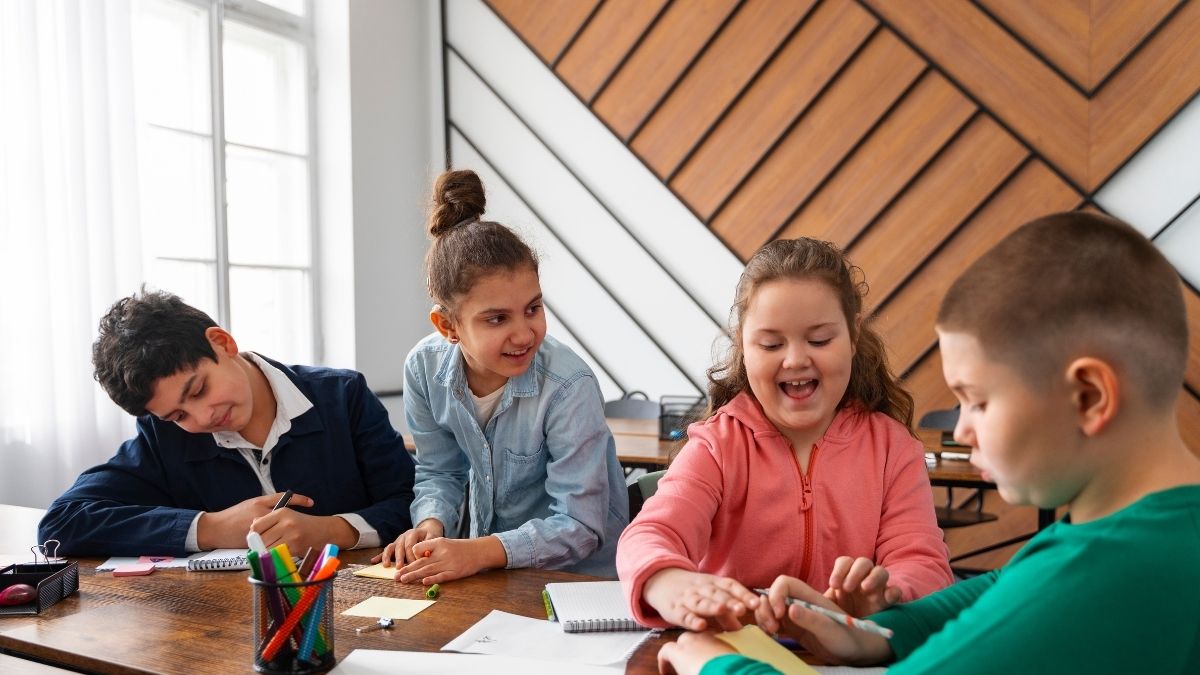
What concrete actions can parents and educators take to nurture leadership traits in children?
Introducing collaborative design tasks within regular learning activities offers families and schools a practical way to build leadership skills. Parents can encourage group projects at home that involve planning, decision-making, and creating tangible outcomes. Educators can embed team challenges in class or afterschool programs where leadership roles rotate and reflection is a regular habit. This approach builds leadership capacity organically through experience rather than theory alone.
Setting up team projects with clear goals and roles
Start by defining a shared objective that excites and motivates group members. Clarify what successful completion looks like and outline basic roles, such as coordinator, designer, or presenter. Keep the structure flexible so children can explore and adapt their approaches. This clarity provides the foundation for effective teamwork and leadership practice.
For example, a simple construction project could involve designing a model neighborhood. Assign tasks like sketching ideas, gathering materials, and presenting the finished work. Encourage discussion about how decisions affect the project and invite everyone to lead at different stages. These concrete steps help children understand how leadership ties to collaboration and accountability.
Using questions and prompts to facilitate reflection
After completing tasks, engage children with open-ended questions about their experience. Ask what went well, what was difficult, and how they managed disagreements. Encourage them to consider how leadership influenced the process and results. This reflection turns experience into learning and lays groundwork for future growth.
Questions such as “How did your team decide on the design?” or “What helped you listen to each other’s ideas?” foster awareness of leadership behaviors. This method supports self-assessment and peer feedback, making leadership development a shared responsibility. Consistent use of reflection creates habits that strengthen social and cognitive skills.
Modeling collaborative leadership behaviors
Adults play a crucial role by demonstrating patience, open communication, and encouragement during team activities. Modeling how to handle conflicts, respect diverse opinions, and involve everyone sets a standard for children to emulate. When adults highlight their own leadership decisions and thought processes, they provide valuable learning moments.
This might look like an educator stepping back to let children negotiate while offering guidance as needed or showing how to reframe disagreements constructively. Parents can reinforce these lessons by discussing leadership examples from daily life. Such modeling helps children internalize leadership as a multifaceted skill that combines empathy, decisiveness, and adaptability.
How can professional guidance enhance leadership development in children’s teams?
Engaging with experienced instructors or programs that integrate leadership principles into team design tasks adds significant value. Professionals bring frameworks and strategies that support adult facilitators and parents in creating effective learning environments. Their expertise helps tailor challenges to developmental levels and ensures that leadership concepts are introduced thoughtfully. Structured coaching and feedback contribute to sustained leadership growth beyond isolated projects.
The role of specialized programs in scaffolding leadership skills
Programs focused on architecture education or design thinking provide hands-on contexts where leadership naturally arises. These settings are designed to encourage iteration, discussion, and cooperation. Professionals can observe group interactions and intervene sensitively to support leadership development without undermining autonomy.
For example, a program that guides children through designing and building models helps them experience the full cycle of planning, execution, and revision. This immersive process embeds leadership skills in authentic challenges. Such targeted experiences are difficult to replicate without expertise and intentional design.
Supporting educators and parents with training and resources
Professional guidance often includes coaching for teachers and parents on how to facilitate team projects effectively. This support covers strategies for managing group dynamics, fostering communication, and encouraging reflection. Access to curriculum materials and assessment tools helps adults create consistent leadership-building opportunities.
Training sessions might involve role-playing scenarios, observation of team work, and methods for prompting critical thinking. By equipping adults with these skills, professional support enhances the quality and impact of leadership development efforts in diverse environments. This comprehensive approach increases the likelihood of meaningful and lasting learning.
Creating pathways for continuous leadership practice
Long-term leadership growth benefits from ongoing opportunities rather than isolated events. Professional programs often include follow-up activities and progressive challenges that build capacity over time. This structure helps sustain motivation and deepen understanding.
For example, youth design programs may offer a sequence of projects with increasing complexity allowing participants to assume varied leadership roles. This continuity fosters confidence and a broader skillset. Collaborations between educational providers and families ensure that leadership development translates across contexts, reinforcing real-world applicability.
Integrating leadership training into creative, hands-on group tasks proves a practical way to nurture crucial social skills in children. For additional information about supporting leadership and collaboration in design education, you can explore resources on effective teamwork through creative conflict. Parents and educators interested in connecting digital creativity with physical projects may find insights on bridging technology and art in home learning useful. For guidance on accessing specialized programs and scholarships, consider the options highlighted in homeschool enrichment pathways. To discuss specific needs or ask about program offerings, please contact us directly.
Frequently Asked Questions
How can team design tasks help develop leadership qualities in children?
Team design tasks require collaboration, communication, and shared problem-solving, which create natural scenarios for leadership to emerge. Children practice taking initiative, negotiating roles, and aligning on a common vision, all of which build foundational leadership skills. These hands-on experiences help children understand leadership as an interactive process within a group.
What challenges do children face when working in teams on creative projects?
Common challenges include unclear communication, conflicting ideas, uneven participation, and difficulty balancing individual preferences with group goals. Such obstacles can hinder progress and make leadership roles harder to adopt. Addressing these challenges requires intentional guidance and an environment that encourages respect and shared responsibility.
How can educators support leadership development during group activities?
Educators can support leadership by setting clear goals, defining roles, facilitating open communication, and encouraging reflective discussions after team tasks. They can model collaborative behaviors and provide balanced guidance that allows children to lead while ensuring productive outcomes. Structured feedback helps children recognize and improve their leadership skills.
Why is reflection important in nurturing leadership qualities?
Reflection helps individuals understand their actions and the group’s dynamics, reinforcing learning from experience. It promotes self-awareness and highlights effective leadership behaviors and areas needing improvement. Regular reflective practices contribute to deeper and more sustainable leadership development.
What role does professional guidance play in enhancing leadership through team projects?
Professional guidance provides frameworks, strategies, and resources that support adults in facilitating leadership development effectively. Specialists can tailor activities to developmental levels, offer coaching, and create longitudinal opportunities for skill growth. This structured support increases the impact of leadership-building projects and contributes to lasting competence.