In professional environments and companies today, a common barrier to successful project outcomes is a lack of true understanding of the needs and perspectives of those being served. Teams often create products or solutions without fully grasping the lived experience of their users, leading to ineffective or overlooked results. This disconnect decreases user satisfaction and can slow progress for organizations trying to innovate or improve services. Fostering an empathetic approach is crucial, yet many professionals need support translating this concept into practice within collaborative settings like user-centered group projects designed for children.
Guiding young learners to develop empathy through project work can plant the seeds for a lifelong skill that enhances teamwork, problem solving, and social awareness. Introducing children to empathy-focused group activities encourages them to consider perspectives beyond their own and work together to solve real challenges thoughtfully. Drawing from my experience working with children, I see architecture education as an effective platform for facilitating this skill in a tangible, project-based way. This article examines why empathy gaps persist in professional settings, what practical steps look like for teaching empathy in group projects, and how guidance from experienced educators can support meaningful development for children and educators alike.
Key Points Worth Understanding
- Understanding user needs remains a frequent stumbling block for teams across industries seeking effective collaboration.
- Empathy requires deliberate practice and reflection, especially in group settings with diverse perspectives.
- User-centered projects help children step beyond personal viewpoints to design solutions meaningful to others.
- Actions to teach empathy integrate active listening, role-play, and cooperative problem-solving within real-world contexts.
- Professional guidance enhances the quality and depth of empathy learning for educators and children.
What challenges do professionals face when designing for others?
Many professionals encounter difficulties fully appreciating the complexity of user needs, which can result in solutions that miss the mark. This often happens because teams may rely on assumptions or incomplete information instead of engaging directly with users throughout the design process. Additionally, time pressures and organizational priorities can push empathy to the background as teams focus on deliverables. This dynamic makes it harder to foster collaboration that genuinely reflects diverse perspectives, weakening overall outcomes. A collaborative, user-centered project model has potential to overcome these challenges by prioritizing empathic understanding from the start, especially when introduced early in educational settings.
Why assumptions create gaps in user understanding
Relying on assumptions is one of the primary causes preventing teams from truly grasping user needs. When a team presumes they know what users want based on limited experience or secondhand information, important nuances may be overlooked. For instance, a technology company might launch a feature aimed at children without consulting them directly, missing usability challenges or interests that only users can reveal. Such gaps emerge because professional roles are often separated from direct user involvement, creating layers of distance between design decisions and actual need. Addressing this requires embedding empathy-building exercises early in project work to help teams develop habits of inquiry and listening.
Another aspect relates to worldview differences between designers and users, which assumptions can mask. Without intentional efforts, professionals risk projecting their preferences onto others, creating choices that feel irrelevant or inaccessible. This disconnect is visible even in simple educational projects, where children designing for peers must learn to pause and consider alternate experiences. Designing structured opportunities to observe and interview users fosters awareness of hidden assumptions and helps develop more accurate empathy that leads to better-design decisions.
How time and productivity pressures hinder empathy
In many professional settings, the pressure to meet deadlines or business goals can squeeze out the time needed for thorough empathy work. Empathizing requires slowing down to listen, reflect, and engage with diverse viewpoints—steps often perceived as costly or nonessential under tight timelines. This leads teams to shortcut user research or limit collaborative dialogue, undermining the depth of understanding critical for meaningful innovation. This tension between productivity and empathy suggests that modeling empathy practices with children in controlled environments creates a safe space to build these habits before entering faster-paced professional contexts.
Time constraints can also lead to tokenistic empathy efforts where teams fulfill requirements superficially but avoid deeper questioning. For example, a user feedback session might be scheduled simply to check a box without truly integrating those insights into design iterations. This approach fails the foundational intent of empathy. Teaching children to value patience and curiosity in group projects nurtures an ethic of care that counters rushed assumptions. Over time, such practice helps lay groundwork for professional environments where individuals advocate for empathy despite time challenges.
What collaboration issues reduce empathy in teams
Empathy faces challenges within teams when collaboration suffers from poor communication or insufficient diversity of viewpoints. Without intentional structures, dominant voices may overshadow others, limiting the breadth of perspective considered during design. This imbalance can cause teams to prioritize the preferences of a few rather than the true needs of a broader group. Additionally, conflict-avoidance tendencies in groups may prevent members from expressing differing views that are essential to uncovering authentic user experiences. Teaching children how to engage constructively across differences during group projects helps to develop the social skills needed to nurture empathy in teams later on.
Another factor is the limited opportunity for teams to engage deeply with the people they are designing for, weakening the motivation to empathize genuinely. When users are abstract or unseen, empathy feels less immediate and compelling. User-centered projects that include direct interaction, such as interviews or observations, combat this issue. For children, hands-on activities where they create with the user in mind provide tangible experience bridging personal biases and real-world considerations. Emphasizing equitable participation and active listening builds group collaboration skills that are critical for empathy-centered design.
Why do empathy challenges continue to exist in educational and professional settings?
Empathy remains difficult to integrate consistently due to cultural, structural, and developmental factors influencing both education and workplaces. Common cultural trends emphasize individual achievement over collective understanding, making it harder to prioritize empathy naturally. Structural issues, such as curricula focused heavily on content over social-emotional learning, narrow opportunities to practice empathy in classrooms. Additionally, empathy involves complex cognitive and emotional skills that develop over time and require practice under skilled guidance to grow effectively. Without intentional teaching frameworks that embed empathy in user-centered group projects, these barriers often persist.
How cultural values affect empathy practice
Cultural values emphasizing competition and personal success can unintentionally deprioritize empathy as a skill. In environments where performance is measured by individual output rather than collaborative effort, students and employees may see less incentive to slow down and consider others’ perspectives deeply. This cultural framing challenges educators and leaders to find ways to reframe empathy as essential for effective teamwork and problem solving rather than an optional soft skill. Groups that practice empathic collaboration in project settings help cultivate a culture where understanding others becomes a valued and natural part of work and learning.
In children’s education, this means balancing development of individual knowledge with social skills. School systems with rigid academic standards may allocate less time to activities that build empathy explicitly. However, incorporating user-centered design projects encourages a shift toward valuing empathy alongside content mastery. From my experience working with children, I think scaffolding empathy through well-structured group tasks gradually builds habits essential for success in both educational and professional life stages.
Structural constraints limit opportunities to learn empathy
The way many educational systems structure learning, with a focus on standardized testing and individual assessment, leaves little room for collaborative empathy-building exercises. Teachers may feel constrained by time or resources, limiting their ability to facilitate authentic user-centered group projects that nurture empathy. Similarly, workplace training programs often emphasize technical skills over interpersonal development. These structural limitations reduce occasions for meaningful practice with empathy. Reimagining schedules and curricula to integrate project-based learning that centers other people’s needs is a practical step forward.
Another structural issue is the lack of consistent training on empathy development for educators and program facilitators. When instructors underestimate how to guide empathy-focused work, the learning experiences may lack depth or fail to connect to real user needs. Programs that offer coaching and curriculum resources for empathy-centered projects equip educators to overcome these barriers. They enable richer, sustained practice for children engaging with peers and communities in meaningful ways.
Developmental complexity requires intentional teaching
Empathy is a sophisticated skill that involves both cognitive perspective-taking and emotional understanding, which children develop gradually. Expecting young learners to demonstrate full empathy without guided practice can lead to frustration or superficial efforts. Intentional teaching methods break down empathy into accessible steps such as active listening, identifying feelings, and imagining others’ situations. Learning through hands-on, user-centered group projects makes these abstract capacities more concrete and easier to grasp. This developmental awareness promotes patience and thoughtful progression rather than rushed expectations.
Moreover, reflection is key to empathy deepening. Allowing children spaces within projects to discuss what they learned about others’ experiences enhances insight and motivation. Without these moments, empathy exercises risk becoming mechanical. Supportive facilitation helps learners connect their actions with real impacts on others, strengthening empathy as a personal and social asset. Educators trained in these approaches provide the professional guidance essential to effective empathy instruction.
What practical strategies support teaching empathy through group projects for children?
Effective empathy teaching encompasses several practical strategies centered on user needs, collaboration, and reflection. First, incorporating user-centered design encourages learners to focus on real people’s experiences rather than hypothetical scenarios. Children engage with stakeholders through interviews or observation to understand challenges holistically. Second, structuring group projects around shared goals and guided roles ensures equitable participation and builds social skills essential for empathy. Third, embedding reflection activities throughout the process fosters awareness of emotional and cognitive insights gained. These elements create a comprehensive learning cycle that develops empathy authentically. For educators seeking to learn more about self-driven learning that fosters empathy and ownership, exploring resources on encouraging kids to lead their creative projects is a valuable complement.
Incorporating real user engagement in projects
User-centered projects start with authentic engagement with the people for whom the children are designing solutions. This might involve simple activities like interviewing classmates, family members, or community figures to gather firsthand insights. Children learn to ask open-ended questions and listen carefully, which models empathy as attentiveness rather than assumption. For example, when designing a classroom organization system, students might interview teachers and peers to identify common frustrations or needs. This grounded approach increases relevance and encourages learners to consider perspectives beyond their own experience.
Engaging real users also means encouraging learners to observe environments or behaviors related to the design challenge. By seeing context directly, children can identify unspoken needs or constraints they might not recognize from discussion alone. For instance, observing a playground’s layout might reveal safety issues or access challenges for some children. Embedding these practices builds habits of inquiry that translate into both school and future workplaces, strengthening empathy as a foundational skill.
Designing group roles and cooperative workflows
Clear roles within group projects help balance participation and create opportunities for empathy between peers. Roles such as interviewer, recorder, designer, and presenter provide structure, encouraging children to contribute according to their strengths while appreciating others’ contributions. Cooperative workflows include shared decision-making moments and conflict resolution opportunities, teaching children to navigate differences with respect. These practices reinforce that empathy is not only about understanding users but also about attentive collaboration with team members.
Additionally, teachers can facilitate social skill development by modeling verbal and nonverbal listening techniques, encouraging turn-taking, and validating diverse opinions within groups. For example, prompting students to paraphrase a peer’s idea before responding deepens engagement and mutual respect. Group projects that build empathy through cooperation prepare children for inclusive and effective teamwork in varied settings. These experiences help mitigate common collaboration problems in early learning environments.
Embedding reflection to deepen empathy insight
Reflection activities are crucial for solidifying empathy lessons. At different phases of a group project, educators can prompt children to share what they learned about users’ feelings, challenges, and contexts. Writing journals, group discussions, or creative storytelling help learners articulate their evolving understanding. Reflecting on initial assumptions versus new insights fosters critical thinking and openness to diverse perspectives. These moments transform empathy from surface awareness into a nuanced, internalized value.
Furthermore, reflection can include peer feedback where children consider how their actions affected teammates and how collaboration dynamics influenced outcomes. Such meta-cognition enhances both social and emotional aspects of empathy development. Over time, groups practicing structured reflection tend to demonstrate improved communication and problem-solving abilities. This cyclical reinforcement makes empathy teaching more effective and sustainable.
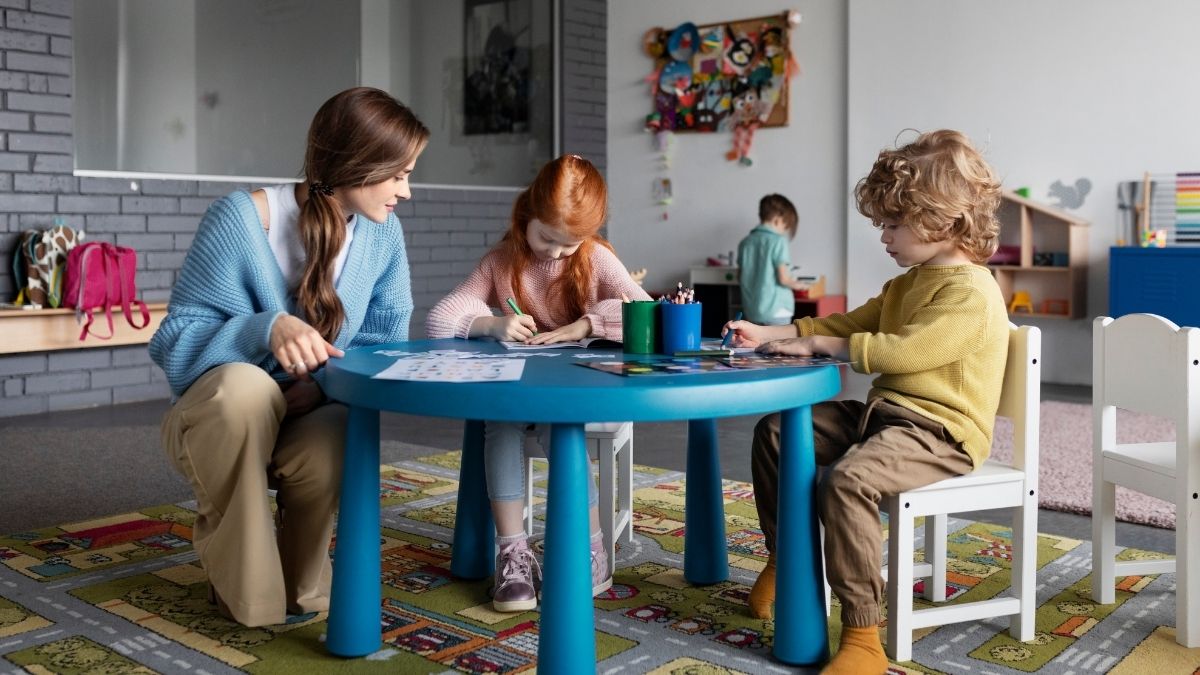
What actions can educators, parents, and program leaders take to foster empathy learning?
To build empathy through group projects effectively, adults involved with children should take deliberate, consistent actions. They can start by designing or selecting projects with clear user-centered goals and providing tools for real user engagement. Facilitators should create an inclusive environment that values diverse opinions and models active listening behaviors. Additionally, allocating time for structured reflection after collaboration phases helps deepen empathy insights. Such practices require preparation and ongoing learning but lead to richer educational experiences. Educators interested in practical methods for guiding teams toward shared goals may find value in frameworks that teach collaborative leadership and vision development.
Selecting and designing meaningful projects
Leaders should prioritize projects with genuine user focus rather than abstract tasks. Projects linked to real community needs, family issues, or peer experiences motivate children to engage more thoroughly. Selecting challenges that require collaboration and multiple viewpoints encourages empathy naturally. For example, creating solutions for playground improvements or organizing school spaces are tangible projects with clear user relevance. Designing scaffolded steps that guide inquiry, prototyping, and feedback increases success and learner ownership.
Involving children in choosing project themes also respects their interests and enhances motivation. Empowered learners approach empathy challenges with greater sincerity. Practical supports such as question templates, observation checklists, and interview guides equip children to gather user data effectively. This preparation makes empathy-driven work concrete and manageable rather than vague or intimidating.
Modeling empathy and communication skills daily
Adults influence children’s empathy growth by demonstrating empathic communication consistently. Simple practices include listening attentively without interrupting, naming emotions, and showing respect for differing opinions. Modeling helps children internalize these behaviors as normal and valuable. Group facilitation that encourages turn-taking and validates feelings creates a supportive social environment where empathy can flourish.
Role-playing exercises or storytelling centered on diverse perspectives further expand children’s emotional understanding. For example, acting out a day in the life of someone with different abilities can reveal challenges non-obvious to children’s own experiences. Such tools build bridges of understanding that extend beyond specific projects. These daily actions embed empathy in classroom culture and home routines alike.
Providing consistent feedback and reflection opportunities
Giving children regular, constructive feedback on their empathy efforts motivates ongoing growth. Feedback focused on listening quality, awareness of others’ feelings, and cooperative behaviors highlights progress and areas for improvement. Integrating group reflection sessions after work phases helps children process emotional and cognitive learning simultaneously. Adults can facilitate open-ended questions such as “What new things did you learn about your user?” or “How did your team handle disagreements?”
Reflection can be individual or collective and supported by visual tools like empathy maps or journals. Maintaining a balance between encouragement and challenge nurtures children’s confidence and critical thinking. Program coordinators might also share summarized observations with educators and parents to encourage alignment and reinforcement across learning settings. Such collaboration ensures empathy learning is intentional and multidimensional.
How can professional guidance improve empathy teaching and learning?
Experienced educators and program leaders play a vital role in designing, facilitating, and refining empathy-centered group projects. Their expertise supports others in selecting suitable project frameworks, mastering facilitation techniques, and incorporating reflection effectively. Professional guidance also helps navigate challenges such as managing diverse groups, differentiating instruction, and assessing social-emotional outcomes. Programs providing curriculum support and instructor coaching create sustainable environments where empathy learning thrives. For parents and educators seeking further support or resources, direct communication with professional programs can clarify implementation strategies and available opportunities.
Supporting project design and curriculum development
Professionals contribute by creating and sharing project templates and curricula explicitly focused on empathy skills within user-centered design. These resources save educators time and avoid trial-and-error approaches. They include detailed lesson plans, activity guides, and assessment tools aligned with developmental stages. Having access to proven frameworks increases confidence and quality across diverse educational settings.
Moreover, specialists embed best practices around group dynamics, role assignment, and user engagement that reflect current research and practical experience. This support adapts to various program formats including afterschool, homeschooling, and formal classrooms. Consequently, children benefit from engaging and meaningful empathy learning tailored to their context.
Training and coaching educators and facilitators
Ongoing professional development equips instructors with skills to foster empathy authentically. Training sessions address facilitation strategies, conflict management, and reflection facilitation. Coaching provides personalized feedback, helping educators refine their approach continuously. This professional growth ensures empathy teaching remains responsive to learners’ needs and evolving educational goals.
By building educator capacity, programs expand their reach and effectiveness. Trainers also share tools for inclusive practices that accommodate diverse learners and support equity. This holistic coaching strengthens community networks centered on empathy-driven education, making sustainability more likely.
Evaluating and improving empathy learning outcomes
Professional programs offer expertise in designing evaluation measures that capture social-emotional learning alongside cognitive gains. These assessments may include observations, student reflections, or peer feedback instruments. Evaluation informs iterative improvements in curriculum and teaching methods, addressing gaps or challenges identified in practice.
Data collected also provides evidence supporting the value of empathy instruction to stakeholders such as schools and families. This external validation encourages continued investment in empathy-focused initiatives. Engaging experts to lead evaluation fosters accountability and continuous learning for all involved.
For those interested in integrating empathy and leadership skills through collaborative project guidance, programs on guiding teams toward shared vision offer valuable complementary frameworks. If you want to discuss how to bring such learning experiences to your context, professional support is available via contacting arKIDect.
Frequently Asked Questions
How can empathy be measured effectively in children’s group projects?
Measuring empathy involves a combination of observational assessments, self-reflections, and peer feedback that focus on behaviors like active listening, perspective taking, and emotional response. Tools such as empathy maps or journals document children’s insights during and after projects. However, empathy is a nuanced skill developing over time, so assessments prioritize growth trends and process over single outcomes.
What age is appropriate to start teaching empathy through user-centered projects?
Empathy education can begin in early childhood with simple activities involving role play and storytelling. User-centered group projects typically suit elementary ages when children develop cognitive perspective-taking abilities. Projects should be developmentally scaffolded to match learners’ emotional and social capacities for the best results.
How can educators handle conflicts that arise during group empathy activities?
Conflicts can be addressed by setting clear group norms, teaching communication skills like calm expression and active listening, and modeling respectful dialogue. Facilitators guide children to view conflicts as opportunities for understanding different perspectives better. Reflection sessions help process emotions and promote resolution collaboratively.
Are there digital tools that support teaching empathy through group projects?
Certain digital tools facilitate user interviews, empathy mapping, and collaborative design work suitable for older children. These platforms encourage documentation and sharing of perspectives but should supplement, not replace, direct human interaction. Blending online and hands-on experiences enriches empathy development in contemporary learning environments.
Can empathy learned in childhood through projects influence future professional success?
Empathy underpins many skills valuable in workplaces such as collaboration, problem-solving, and innovation. Early practice through group projects primes children to engage thoughtfully with diverse teams and user needs later in life. While not the sole factor in professional success, empathy contributes to meaningful relationships and effective teamwork.