Many educators and parents observe that teaching math concepts like geometry and measurement remains a difficult task when approached through traditional textbooks and worksheets alone. Companies and education professionals offering online math resources frequently face the problem of connecting these abstract concepts to real-world applications that children can relate to and engage with actively, especially in virtual settings. This disconnect can limit student motivation and the depth of understanding achieved. To address this, various learning providers are looking for means to incorporate hands-on building projects that foster tangible experiences with math and design principles, making learning more relevant and memorable.
Understanding these challenges requires looking at how persistent these difficulties are across different settings, whether classroom environments, homeschooling, or afterschool programs. Many existing curricula still rely heavily on rote practice, which may cause children to lose interest or fail to grasp how mathematical ideas like spatial reasoning or scaling apply beyond the page. Practical solutions involve integrating physical design challenges that prompt learners to test and visualize math in action. These project-based approaches offer pathways to deepen comprehension and provide diversity in teaching strategies that fit well with STEAM and home education goals.
Key Points Worth Understanding
- Physical building activities ground mathematical concepts in visual and tactile experiences.
- Incorporating design challenges encourages problem-solving and critical thinking skills development.
- Online delivery of hands-on math learning requires adaptable materials and clear guidance.
- Geometry becomes more accessible when learners move from abstract formulas to concrete models.
- Professional support enhances the alignment of projects with learning objectives and progression.
What difficulties arise when teaching practical math through building online?
Educators and program developers aiming to teach practical math lessons through building projects online often find it challenging to replicate the interactive and hands-on atmosphere critical for effective learning. Children benefit from physically manipulating materials to understand dimensions, proportions, and shapes, but virtual platforms can restrict this direct interaction. Additionally, coordinating building activities remotely requires clear instructions, suitable materials that learners can access at home, and strategies to maintain engagement without a physical instructor present. These hurdles contribute to difficulties in sustaining the active involvement essential for mastering math concepts through design tasks.
Why physical interaction enhances math learning
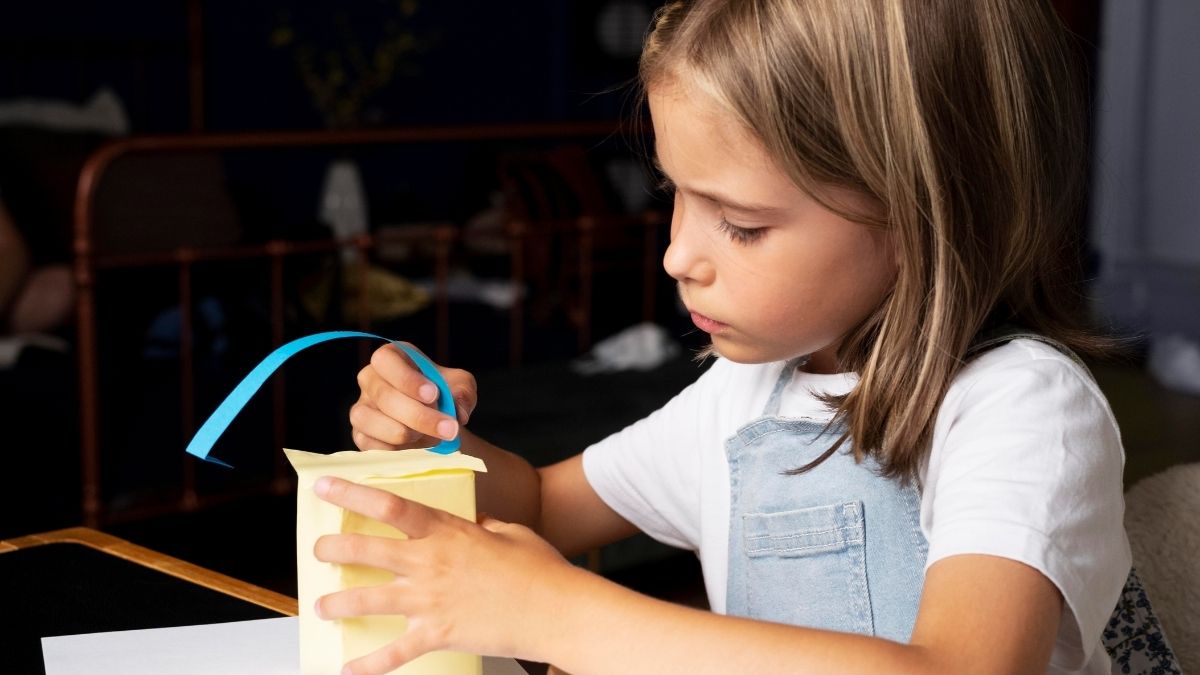
Hands-on building activities allow children to experience mathematics as a living subject rather than static symbols on a page. For instance, constructing a simple model of a cube helps learners visualize volume and surface area, providing a physical context to support abstract calculations. This interaction promotes spatial reasoning and helps children internalize geometry more deeply than paper-based examples can. When learners build and test designs themselves, they receive immediate feedback on measurements and proportions, reinforcing their understanding in real time.
Without physical interaction, many students struggle to connect symbols and formulas with practical use cases. Virtual learning that attempts to substitute hands-on work with videos or images risks losing the multisensory engagement that supports diverse learning styles. Therefore, replicating the tactile dimension in online math education remains a significant challenge requiring creative instructional design.
Challenges of coordinating materials for home use
Another complication lies in ensuring that learners have the necessary materials at home to participate fully in building projects. Unlike classrooms or makerspaces equipped with tools and supplies, homes vary widely in available resources, which can limit the feasibility of some activities. Educators must carefully select materials that are affordable, safe, and easily sourced by families, or provide alternatives that accommodate differences in home environments. Instructions must be clear and flexible, allowing students to adapt according to what they have on hand.
This logistical issue requires program designers to balance educational goals with practical realities, often relying on common household items or easily purchasable kits. Failure to consider these constraints can lead to uneven participation and frustration, especially for learners without robust support at home. Clear communication with parents about preparation and expectations is essential for success.
Maintaining engagement virtually during construction tasks
Keeping children motivated and focused in an online setting during physical building challenges demands purposeful facilitation and well-structured activities. Without in-person supervision, some learners may lose concentration or misunderstand steps, which can interrupt the flow and reduce learning effectiveness. Using live sessions with instructor guidance can mitigate this but requires sufficient staffing and technology tools to support interaction.
Project pacing also matters; designing tasks that are appropriately challenging yet achievable helps sustain enthusiasm and builds confidence. Online platforms that include visual demonstrations, feedback mechanisms, and opportunities for peer sharing further encourage active participation. Nevertheless, achieving the right balance can be difficult, especially in mixed-ability groups or younger age ranges prone to distraction.
Introducing the concept of expanded learning opportunities beyond traditional classrooms can assist professionals in finding diverse solutions for delivering hands-on math through building challenges.
Why do these teaching challenges continue to appear despite efforts?
The persistence of these challenges is often rooted in systemic limitations within education systems and resource availability. Many math curricula were developed with an emphasis on procedural fluency over conceptual understanding, which leaves little space for experiential learning. Additionally, insufficient professional development leaves educators unprepared to integrate project-based learning effectively, particularly in online formats. Technology infrastructure gaps and disparities in home environments further contribute to unequal access to quality hands-on math learning.
Curricular constraints limit hands-on integration
Standardized curricula tend to prioritize coverage of topics over depth, often leaving minimal time for exploratory projects that require building and design. Schools and programs may face pressure to follow rigid pacing guides and testing schedules that do not accommodate the extra time needed for hands-on experiences. As a result, math education remains focused on written exercises rather than multi-sensory tasks.
Without systemic changes encouraging active, design-centered math instruction, educators must work within these constraints, sometimes compromising the quality of experiential learning. This situation has led to calls for curriculum reform that better reflects the needs of students to engage with math practically and creatively.
Lack of training in hands-on and online teaching methods
Educators themselves may lack training or confidence in delivering hands-on math lessons, especially when transitioning to online teaching platforms. Implementing physical design projects requires knowledge of materials, safety, and ways to facilitate learning remotely. Without professional development focused on these skills, instructors may default to traditional lecture and worksheet methods.
Furthermore, balancing the demands of curriculum content with the preparation and management of building activities can feel overwhelming, discouraging experimentation. Supporting teachers through dedicated coaching, resources, and community sharing of best practices is necessary to overcome this barrier.
Unequal access to materials and technology
Many families do not have equal access to the materials or technology needed for effective online hands-on math learning. Some learners may lack reliable internet, computers, or even appropriate workspace at home, while others may not have funds to purchase project supplies. These disparities widen existing educational gaps and complicate consistent program delivery and participation.
Addressing equity in resources requires intentional program design that includes low-cost or no-cost options and supports families in preparation. Partnerships with local organizations and vendors can also help supply materials and technology support where needed to create more inclusive learning opportunities.
What do effective practical solutions involve for building-based math education?
Practical solutions start with designing projects that connect mathematical concepts directly to building and design experiences, ensuring activities are purposeful and grounded in relevant skills. Clear, step-by-step guidance adapted for online and diverse home settings helps learners engage confidently. Incorporating visual aids, scaffolded challenges, and opportunities for reflection enhances understanding. Additionally, ongoing support for instructors and families permits smoother implementation and adaption based on learner needs.
Selecting projects that represent key mathematical skills
Effective projects emphasize math topics that benefit from tangible exploration such as geometry, measurement, scale, and spatial reasoning. Examples include constructing simple bridges to understand forces and balance, or designing floor plans to practice area and perimeter calculations. Selecting challenges that align with learning objectives and student ability ensures activities are neither trivial nor overly complex.
By focusing on projects that reveal math’s practical value, children can see the relevance and application of their lessons. This approach strengthens conceptual understanding and supports transfer to other problem-solving situations.
Preparing adaptable materials and instructions
Solutions should include provision of instructions tailored for online delivery, with alternatives for material availability and space considerations. For instance, using household objects like cardboard, string, or recycled materials expands accessibility. Providing video demonstrations or downloadable templates can supplement textual explanations, making activities transparent and manageable for varied home contexts.
Careful preparation accommodates differing family situations and maximizes participation. Clear communication with parents about what to expect and how to assist their children supports successful project completion.
Integrating assessment with hands-on activities
Assessment that values process as well as product is essential in practical math education through building challenges. Observations, portfolios, and reflective discussions capture learning progress beyond conventional tests. For example, students might document design iterations or explain their measuring strategies. This holistic evaluation gives insight into students’ reasoning, creativity, and application of math concepts.
Aligning assessment methods with hands-on tasks supports continuous feedback and encourages growth mindset. It also helps educators and parents understand strengths and areas for development, guiding future instruction.
Drawing from the approach of portfolio-based assessment in homeschooling can provide useful frameworks for evaluating math learning through design projects.

What practical steps can families and educators take to implement these solutions?
Starting with small, manageable building projects that focus on one or two math concepts lets learners acclimate to hands-on, online learning. Establishing a dedicated workspace and gathering accessible materials eases preparation. Integrating regular check-ins with instructors or peers encourages accountability and support. Using digital platforms that facilitate sharing work and receiving guidance improves engagement and continuity.
Planning and organizing material kits
Gathering a basic set of materials tailored to upcoming projects can minimize disruptions and encourage focus. Items such as rulers, measuring tapes, cardboard sheets, or craft sticks are commonly useful. Organizing kits ahead of lessons avoids scrambling and builds readiness. Parents can collaborate with educators to understand needed supplies and suggest substitutions for local availability.
Material planning also enables thoughtful budgeting and enhances the likelihood of participation from all learners regardless of household resources.
Scheduling regular hands-on sessions
Consistency plays a key role in building mastery through hands-on math education. Setting a weekly or biweekly schedule for building sessions helps sustain momentum and habit formation. Structured time reinforces the importance of math in design and enables gradual skill accumulation. Including reflection periods where learners discuss challenges and discoveries fosters critical thinking.
Routine sessions also benefit parents and educators by providing predictable frameworks to support and assess progress. Flexibility within this routine accommodates varying rhythms and commitments.
Encouraging family and peer involvement
Including family members in building challenges can enrich the learning experience and provide essential support, especially for younger children. Parents or siblings can assist with measuring, cutting, or assembling projects, making math a shared activity rather than an isolated task. Peer collaboration through online groups or video meetings promotes social learning and motivation. Sharing designs and solutions encourages communication and creative exchange, vital skills for STEAM learning.
This collaborative aspect models real-world teamwork and helps children appreciate multiple perspectives within problem solving.
How can professional guidance enhance the effectiveness of building challenges in math teaching?
Educators and program developers with expertise in both math education and hands-on learning can create well-structured building challenges that connect clearly to key math concepts and meet diverse learner needs. Guidance ensures projects are developmentally appropriate, incorporate inclusive strategies, and leverage technology effectively in online environments. Professionals provide coaching for parents and instructors, supporting implementation and problem resolution. This expertise helps maximize learning outcomes and maintain student engagement over time.
Designing aligned and progressive curricula
Professional guidance contributes to developing curricula where building projects are sequenced thoughtfully, building from foundational skills to more complex tasks. Such alignment ensures learners experience continuous challenge without overwhelming gaps. Experts integrate cross-disciplinary links, reinforcing math connections to science, art, and engineering. This coherence improves retention and enthusiasm.
Curriculum specialists also adapt content to regional or cultural contexts where relevant, enhancing relevance and accessibility for diverse learner groups.
Supporting educators and parents with training
Training sessions led by experienced practitioners equip educators and parents with practical techniques for facilitating hands-on math learning. Topics include material preparation, safety, scaffolding instruction, and using digital tools to enhance remote engagement. This support bolsters confidence and effectiveness, reducing common frustrations associated with new teaching methods.
Ongoing professional development communities allow continuous skill refinement and sharing of success stories and challenges, benefiting the broader education ecosystem.
Providing tailored feedback and assessment tools
Professionals can design assessment frameworks and tools that reflect the iterative and explorative nature of building projects in math learning. Examples include rubrics focused on process skills, digital portfolios, and self-assessment prompts. Tailored feedback helps learners recognize progress and areas for growth, encouraging persistence and reflection.
Access to these resources assists educators in documenting learning for stakeholders such as parents or school administrators and supports transparent reporting on student development.
When seeking support to implement hands-on math education through design challenges, connecting with experienced programs and professionals is valuable. For inquiries or assistance, you can reach out to arKIDect’s team who specialize in practical math and geometry through building projects online.
Frequently Asked Questions
What age groups are best suited for learning math through building and design projects?
Building and design projects can be adapted for a wide range of ages. arKIDect offers programs suitable for children starting in early elementary through middle school, with activities scaled in complexity according to developmental stages. Younger learners may focus on basic shapes and measurement, while older students engage with more advanced geometry and design challenges. Hands-on experiences help children grasp math concepts in meaningful ways appropriate for their skill level.
Are these math-building classes available online and how do they work?
Many of the hands-on math classes that integrate building and design projects occur online, utilizing video instruction, digital collaboration tools, and home-based materials. Students receive guidance through live or recorded sessions, complete projects independently or with family support, and share results with instructors for feedback. arKIDect’s approach includes providing clear instructions and adaptable materials lists to accommodate home environments, ensuring accessible and interactive learning remotely.
How is practical math like geometry taught through these building challenges?
Geometry lessons become concrete when learners construct physical models demonstrating concepts such as angles, symmetry, and dimensions. Projects may include creating shapes out of craft materials, designing scale models, or assembling components that illustrate spatial relationships. This hands-on approach helps children move beyond abstract formulas to tangible understanding, fostering stronger spatial reasoning and measurement skills.
Where does arKIDect offer these educational programs in Miami or nearby?
arKIDect provides programming both online and in local settings in Miami and Sunny Isles Beach. These programs blend virtual instruction with occasional in-person workshops or events where possible, supporting diverse family needs. Selecting the right format depends on preferences regarding location, technology access, and scheduling. Parents interested in local options can contact arKIDect to learn about current offerings and enrollment details.
Are the building and math classes group-based or one-on-one sessions?
arKIDect offers both group classes and opportunities for more individualized sessions based on learner needs. Group settings encourage collaboration and peer learning, which can enhance motivation and communication skills. One-on-one or small group instruction allows tailored pacing and focused support for children requiring extra attention. Programs are designed to accommodate various preferences and support effective learning environments.
For further information regarding how to incorporate hands-on math learning through building activities in your educational setting, explore related insights on design thinking with STEAM subjects and discover construction sets for problem solving that complement this approach.