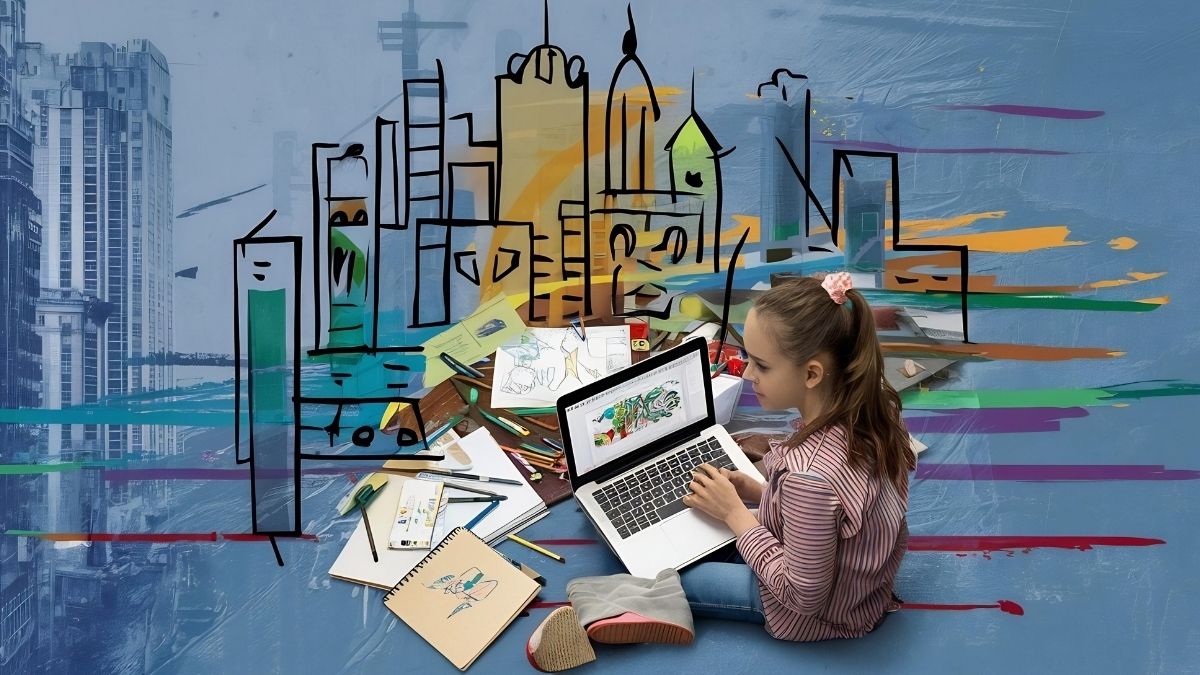
Many aspiring young artists face challenges when preparing for the DASH audition drawing, especially in mastering composition and spatial thinking—skills essential for presenting their ideas clearly and convincingly. Professional arts programs and educational organizations often notice that children struggle with organizing visual elements effectively to communicate a concept. This issue is common as spatial reasoning and composition are not always emphasized in standard art education, leaving children uncertain about how to approach these necessary skills for the audition successfully. arKIDect offers practical approaches tailored to these needs, supporting children to develop these critical thinking abilities in preparation for DASH evaluations through focused teaching methods and creative exercises, as seen in creative portfolio projects.
Understanding why composition and spatial thinking pose challenges requires looking at the learning context children encounter. These skills involve more than drawing talent; they demand conscious planning, spatial awareness, and the ability to balance elements on paper to guide the viewer’s eye effectively. Yet, many educational settings still rely heavily on technical skill drills without integrating design thinking or spatial problem solving as part of the core curriculum. This gap leaves many students without a robust framework for approaching complex drawing tasks like the DASH audition drawing. The arKIDect approach views architecture education not as separate from art but as a thinking tool that bridges creativity with spatial intelligence. From my experience working with children, I see architecture education as a valuable way to build these skills organically while keeping learning engaging.
Key Points Worth Understanding
- Composition and spatial thinking are foundational skills for successful DASH audition drawing.
- Many children struggle because these skills are often taught in isolation or overlooked in typical art classes.
- Practical, project-based learning helps children connect design concepts with hands-on drawing exercises.
- Supporting visual organization aids communication and confidence in portfolio presentation.
- Guided instruction that links architecture thinking with drawing tasks can improve learning efficiency.
What Challenges Do Children Encounter in Learning Composition and Spatial Thinking?
Children preparing for the DASH audition drawing frequently face difficulties organizing space and composing compelling imagery. Creating a balanced composition requires understanding relative scale, perspective, and the way shapes relate within a frame—concepts not always intuitive to young learners. Without targeted strategies, their drawings may feel cluttered, sparse, or lacking focus.
Understanding Visual Balance and Arrangement
Visual balance involves distributing elements so the drawing feels stable and intentional. Children often underestimate how placement affects this balance. For example, clustering too many objects on one side can lead to an unsteady composition that distracts the viewer. Many kids need explicit teaching on how to arrange shapes and forms to create equilibrium, guiding the eye across the page naturally rather than randomly placing elements. Encouraging children to think about positive and negative space helps them make more deliberate compositional choices.
Guided exercises focusing on symmetry and asymmetry support learners in exploring these ideas with confidence. By sketching simple compositions and adjusting element placement, children develop a hands-on feel for balance and harmony in images. This concrete exploration builds a foundation that directly translates into better drawing outcomes for the DASH audition.
Developing Spatial Awareness Through Drawing
Spatial thinking involves recognizing the relationship between objects in three-dimensional space and translating that to the two-dimensional surface of a drawing. Children often struggle with representing depth, overlap, or viewpoint correctly, which can make their work look flat or confusing. Without clear frameworks for spatial reasoning, learners may rely on guesswork instead of systematic observation and planning.
Teaching concepts such as foreground and background or simple perspective techniques builds critical visual intelligence. Activities that combine model-building with drawing enable children to see and manipulate physical forms, reinforcing their understanding of space. For instance, constructing small architectural forms before sketching helps children internalize volume and dimension, which they then reflect in their drawings with more accuracy and intent.
Bridging Conceptual Thinking and Drawing Execution
Composition and spatial understanding require children to approach drawing as a problem-solving process rather than only a creative expression. This dual mindset challenges many young learners, especially when under pressure like during the DASH audition. The gap between conceiving an image and executing it visually can lead to frustration and underdeveloped work.
Structured project sequences where children first plan their layout with thumbnails and simple diagrams ease this transition. Children learn to visualize ideas, organize components logically, then move step-by-step to detailed drawing. This method reduces overwhelm and supports clearer, more confident final pieces. arKIDect’s framework leverages architecture education principles to guide kids through this process effectively.
Why Does This Struggle with Composition and Spatial Thinking Continue to Persist?
The persistence of these challenges partly stems from traditional art instruction focusing mainly on technique or replication rather than design thinking fundamentals. Many programs emphasize rendering skills without embedding preparatory work on how to organize or structure a composition conceptually. This means children miss out on building deeper cognitive skills that support meaningful image-making, especially for complex briefed tasks like the DASH audition.
The Gap Between Technical Skill and Design Thinking
The focus on perfecting lines, shading, or perspective in isolation overlooks the larger context of what makes an artwork effective. Design thinking requires children to reflect on their choices about what to include, how to relate forms, and how to manage space. Without explicit encouragement or instruction in these areas, default strategies can limit growth. Consequently, students may excel in certain skills but falter in integrating those skills into a cohesive composition.
Creating curricular bridges between these areas remains a challenge in many art education settings. This situation leaves educators and parents searching for supplementary programs that emphasize spatial reasoning and planning as essential complements to drawing practice. arKIDect’s integration of architectural concepts helps address this gap by making design thinking tangible and accessible.
Lack of Hands-On, Project-Based Opportunities
Another reason problems endure is the scarcity of project-based, experiential learning that allows children to experiment and connect abstract ideas to concrete actions. Without these direct experiences, conceptual ideas like spatial relationships can remain theoretical and hard to grasp. Static worksheets or passive lessons fail to engage children in the active problem solving that solidifies understanding.
Engagement through making models, physical explorations of space, and iterative drawing tasks forms an effective counterbalance. arKIDect’s hands-on model-making exercises paired with drawing challenges foster meaningful connections between tactile understanding and visual representation. These real-world applications support children’s ability to transfer spatial reasoning into their audition drawings successfully.
The Pressure and Specificity of the DASH Audition Context
The audition itself introduces constraints that can intensify difficulties with composition and spatial thinking. The need to produce a polished drawing within a limited time and according to particular criteria may heighten performance anxiety. Children who have not built a confident workflow for organizing their ideas visually may find these conditions particularly challenging.
Supporting students through structured preparation and helping them develop efficient planning strategies reduces these challenges. When children feel equipped with manageable steps and conceptual clarity, their ability to perform under audition conditions improves. Providing this guidance is a key part of arKIDect’s support for DASH candidates.
What Do Effective Solutions for Teaching These Skills Look Like in Practice?
Practical solutions balance structured conceptual instruction with opportunities for hands-on, explorative learning. Programs designed to support DASH audition preparation focus on building composition and spatial thinking systematically while keeping children engaged through relevant projects. Activities combining drawing, model making, and spatial reasoning tasks help learners develop a complete skill set adaptable to the audition format.
Using Architecture-Inspired Exercises for Spatial Reasoning
Applying architecture learning frameworks provides children with clear, approachable ways to think about space and form. For example, constructing simple three-dimensional models encourages observation of volume, scale, and relation between objects. These insights then inform their two-dimensional drawings, where translating physical experience to paper deepens spatial understanding.
This approach also builds critical cognitive skills like visualization and planning, which support all spatial tasks. The physical to visual connection breaks down abstract concepts and makes spatial reasoning accessible. By integrating these exercises into drawing preparation, children are better prepared for the complexity of DASH audition challenges.
Scaffolding Composition Through Step-by-Step Planning
Effective teaching breaks the composition process into manageable phases. Children start by thumbnail sketches focusing on general arrangement and balance without detail pressure. Gradually, they refine their layouts, considering scale, focal points, and flow. This phased approach helps learners organize thoughts clearly and reduces overwhelm.
Guidance through this planning supports reflective decision-making and improves final drawing quality. It enables children to understand design as a purposeful process rather than trial and error. arKIDect coaches emphasize this scaffolded method to promote strong compositional habits that endure beyond the audition.
Encouraging Reflection and Iteration
Allowing time for children to review, reflect, and adjust their work is an important element. Encouraging them to critique their compositions with specific questions about spatial arrangement and clarity leads to deeper understanding. This iterative process fosters resilience and problem-solving, essential as children tackle complex projects like the DASH drawing.
Reflection prompts help children move beyond surface judgments to analyze how effectively their composition communicates ideas. With this practice, they identify improvement areas, which builds skills transferable to future creative challenges. Incorporating this mindset in arKIDect’s teaching ensures that learning is active and evolving.

What Practical Actions Can Parents and Educators Take to Support Children?
Parents and educators can play crucial roles by creating supportive environments and providing access to resources that develop composition and spatial reasoning skills. Encouraging project-based activities and offering tools that combine making with drawing enrich children’s learning experiences. Simple steps include providing materials for model construction and dedicating time for sketch planning and review.
Integrate Hands-On Building Projects Regularly
Introducing small building projects related to everyday objects or architectural forms helps children engage physically with space and form. These tangible experiences support understanding of scale and spatial relationships, which translate to more confident drawing. For instance, constructing paper models before sketching exposes learners to three-dimensional thinking that is often missing from flat drawing exercises.
Providing time and encouragement for this type of exploration enhances spatial awareness naturally. Parents and teachers can support this by guiding children in observing and manipulating forms carefully, reinforcing lessons in shape and composition.
Encourage Sketching with Purpose
Promoting sketching as a planning tool rather than just a finished product shifts children’s focus toward design thinking. Children can be prompted to create multiple quick compositions and compare their effects without pressure for perfection. This practice helps them see sketching as a useful tool for organizing ideas before committing to final work, a critical habit for success in the DASH audition context.
Offering constructive feedback focused on compositional decisions rather than just technique builds confidence and insight. Encouraging children to explain their choices supports verbal and visual reasoning development, reinforcing spatial and design skills.
Provide Clear Examples and Guided Practice Opportunities
Offering examples that show good composition and spatial thinking helps children internalize principles. Analyzing and discussing existing drawings or architectural works creates reference points for learners. Additionally, providing guided exercises that lead children through composition planning and spatial reasoning tasks gives structure to learning.
These guided moments offer opportunities to clarify misconceptions and highlight effective strategies. Whether at home or in classroom settings, nurturing an environment where children can experiment safely and receive thoughtful insights encourages steady skill growth.
How Can arKIDect’s Professional Guidance Enhance Preparation for the DASH Audition Drawing?
arKIDect supports children through experienced educators who integrate architecture education principles into effective teaching of composition and spatial thinking. Our instructors tailor lessons to children’s developmental stages and learning styles, providing individual feedback and structured projects that meet DASH requirements. This professional guidance ensures children build a comprehensive skill set that extends beyond the audition itself into ongoing creative development. For families interested, contacting arKIDect provides direct access to expert advice and enrollment information.
Individualized Attention to Learning Challenges
Each child experiences composition and spatial thinking development differently. arKIDect’s educators observe learners closely to identify specific areas needing support. This targeted approach allows for customized exercises and scaffolding, helping children overcome obstacles efficiently. Personalized attention maximizes learning time and builds confidence by addressing needs head-on.
In preparation for the DASH audition, this means children receive help not only in skill building but also in managing the audition process itself. Strategies for pacing, decision-making, and stress management are woven into coaching to ensure readiness.
Integrating Multimodal Teaching Methods
arKIDect combines visual, physical, and verbal learning strategies to engage children comprehensively. Drawing lessons go hand-in-hand with model building, group discussions, and reflection activities to reinforce concepts. This multimodal approach addresses varied learning preferences and deepens understanding of spatial and compositional principles.
Using a variety of tools and methods prepares children to approach the DASH drawing task from multiple angles. Experiencing content in different formats increases retention and application skills, making preparation both thorough and adaptable.
Supporting Continuous Skill Development Beyond Audition
Preparing for the DASH audition through arKIDect is not solely about short-term success. The program emphasizes foundational skills that support children’s future growth in creative and technical fields. By building spatial thinking and composition through architecture education, children gain transferable skills valuable in many disciplines beyond art and design.
Our long-term perspective helps parents and educators see the broader benefits of this approach. arKIDect’s commitment ensures that children develop habits of observation, planning, and problem solving that serve them well beyond any specific audition or project.
Those interested in exploring how to strengthen DASH portfolio work further may find useful insights in our discussion of model-making projects that complement drawing skills. Also, for families balancing preparation with schoolwork, reading about physical building to support spatial reasoning adds additional context on skill development. To inquire about programs or schedule a consultation, please contact arKIDect directly.
Frequently Asked Questions
What age groups are best suited for composition and spatial thinking classes at arKIDect?
arKIDect offers programs designed for children in elementary through middle school, typically ages 7 to 14. Instruction is tailored to developmental stages, so both beginners and more experienced young learners benefit from the classes. Early exposure to spatial reasoning and composition supports steady skill development over time.
Are the classes offered by arKIDect focused only on drawing or do they include other activities?
Classes incorporate a mix of drawing, model-making, and hands-on activities that integrate architecture and design principles. This multimodal approach helps children connect spatial concepts with visual expression, promoting comprehensive understanding. Drawing is one part of a broader creative learning experience.
Do arKIDect programs support preparing for the DASH audition specifically?
Yes, arKIDect programs provide targeted support for the DASH audition drawing by developing key skills in composition, spatial awareness, and design thinking. The curriculum includes strategies aligned with audition requirements and helps children build confidence through practice and feedback.
Where are arKIDect classes located and are options available in Miami or Sunny Isles Beach?
arKIDect offers classes in locations accessible to families in the Miami and Sunny Isles Beach areas, creating convenient options for local learners. Details about current session locations and schedules can be obtained by contacting the organization directly or visiting their website for updates.
Are classes group-based or can children receive one-on-one instruction during DASH preparation?
arKIDect offers both group classes and private coaching options to best meet individual learner needs. Group settings foster collaboration and peer learning, while one-on-one instruction provides personalized attention, which can be especially helpful for children seeking focused support in preparation for DASH auditions.