
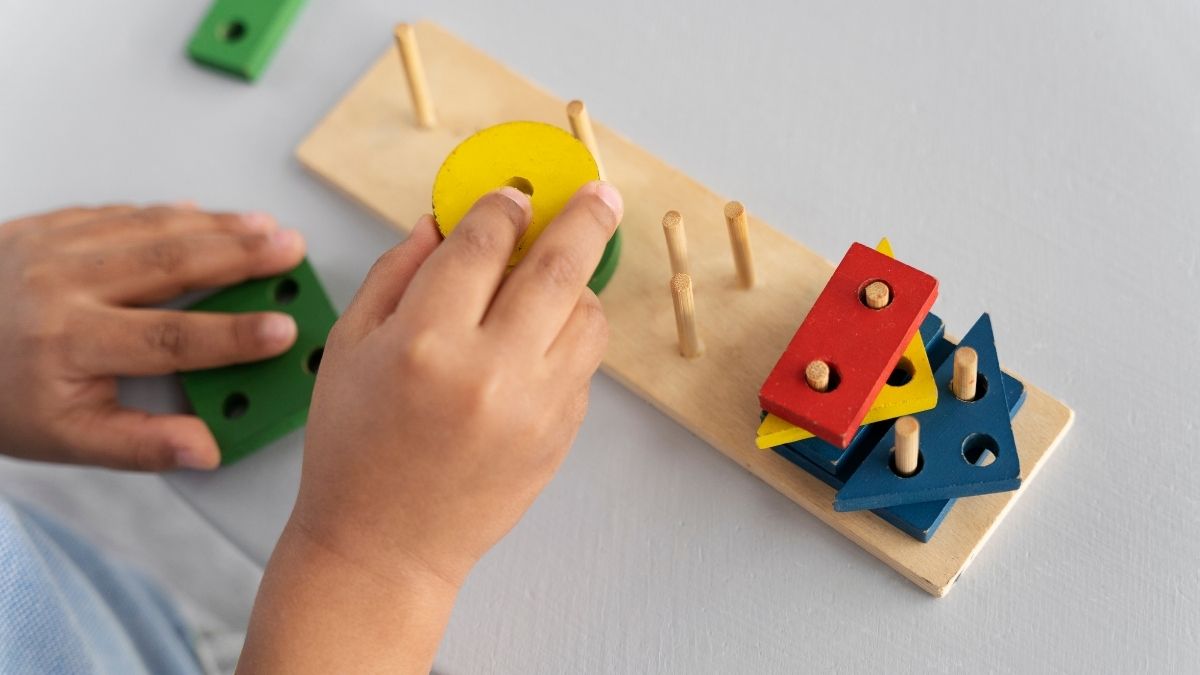
Children often find abstract geometric concepts hard to grasp when introduced through traditional classroom techniques. Professionals and educators working with young learners see that many kids struggle to visualize and understand three-dimensional shapes simply through drawings or verbal explanations, which limits their spatial thinking development. This challenge is common in early education, where foundational geometry is critical to later math and design skills. For educators seeking effective methods, integrating hands-on building models becomes a practical approach to bridge this gap in understanding for introducing spatial concepts in tangible ways.
Realistically, introducing 3D geometry to children aged 6 to 12 requires thoughtful strategies that go beyond worksheets and rote memorization. These strategies must consider the developmental stage of young learners, enabling them to explore shapes, dimensions, and relationships through touch and manipulation. As an educator focused on architectural learning, I see hands-on model building not just as an activity but as a fundamental mode of thinking that supports deeper comprehension and creativity from early ages. This article outlines common challenges, explains why they exist, and offers practical steps for parents, teachers, and program leaders who want to support children’s 3D learning effectively.
Key Points Worth Understanding
- Young children benefit from physically manipulating 3D shapes to understand spatial relationships better.
- Traditional methods often fail because they treat geometry as abstract symbols rather than tangible experiences.
- Hands-on building integrates creativity with problem-solving, encouraging active rather than passive learning.
- Practical model-building activities can be adapted to different age levels and materials to keep learners engaged.
- Professional guidance helps structure learning so children connect building tasks with underlying geometric principles.
What challenges do educators face when teaching 3D geometry to children?
Many educators notice that explaining three-dimensional geometry with only verbal and visual tools results in limited engagement and comprehension among young students. This is because children often lack the spatial experience needed to imagine shapes and solids in their minds. Educational systems tend to emphasize 2D representations which do not fully capture the complexity of volume, edges, and faces. Without concrete experiences, children can develop misconceptions or lose interest when material feels too abstract.
Why do spatial concepts feel abstract to kids initially?
From a developmental standpoint, young children’s spatial reasoning is closely tied to sensory and motor experiences. Reading or hearing about cubes or pyramids without handling physical examples detaches the concept from their natural way of learning. Many children at ages 6–12 are still cultivating the ability to mentally rotate and visualize objects. Traditional textbooks often present geometry in 2D sketches that require high levels of abstraction, which can be confusing or discouraging. Using models allows kids to explore by touching and building, which makes the ideas more concrete and accessible.
In addition, educators might struggle with limited classroom time and resources to provide hands-on experiences. Without small-group settings or materials designed for active exploration, instruction may default to worksheets and demonstrations that lack varied sensory input. These limitations create persistent barriers where children remain passive learners in geometry classes despite their potential for active discovery.
How does lack of spatial experience affect math readiness?
Spatial reasoning is foundational not only to geometry but to broader math and STEM skills. Students who have underdeveloped spatial skills often find problem solving with shapes and measurements challenging later in their education. Without early hands-on practice, their ability to understand symmetry, perspective, volume, and scale can lag behind peers. This gap impacts confidence and performance in math, making advanced topics seem unreachable. Encouraging tactile engagement by manipulating 3D models helps children build mental frameworks essential for higher order thinking in math and design.
Moreover, difficulties in spatial reasoning are linked to struggles in areas such as engineering and computer science. Providing early, hands-on geometry learning addresses these issues before they widen over time. Another common difficulty for teachers is balancing curriculum standards with experiential learning—hands-on model building often demands flexible schedules, which are sometimes hard to accommodate within strict academic programs.
What common missteps limit effective 3D geometry learning?
One misstep is relying heavily on memorization of terms or shape names without contextual understanding. Children might learn to label “cube” or “cylinder” but fail to grasp how these shapes relate to one another or appear in real life. Another common issue is insufficient variation in activities; repetition of the same kinds of tasks can reduce engagement and exploration. Some programs also avoid 3D building due to perceived complexity in materials or setup, which limits opportunities for hands-on discovery.
Finally, treating geometry as a disconnected subject rather than integrating it within creative play or design projects can reduce its relevance. When children see 3D geometry connected to problems they can solve with their hands, such as building model homes or structures, motivation and understanding improve. From my experience working with young learners, I find that linking model-building tasks with everyday examples makes spatial learning feel purposeful rather than abstract.
What practical solutions help children learn 3D geometry through building?
Hands-on building models serves as an effective solution because it transforms passive concepts into active experiences. Using familiar materials like cardboard, paper, or simple blocks allows children to construct and deconstruct shapes, revealing their properties in visible and tangible ways. This approach supports not only cognitive understanding but also fine motor development. Well-structured activities guide young learners from simple forms to more complex three-dimensional challenges, maintaining engagement across ages 6 through 12.
How can tactile activities reinforce geometric concepts?
Tactile activities involve touching, folding, stacking, or assembling shapes and models, which solidifies the recognition of faces, edges, and vertices. For example, building a cube from paper helps children observe how two-dimensional nets fold into a 3D solid. These experiences make abstract vocabulary concrete because kids physically experience the shape’s structure. Tactile learning also encourages experimentation; children test hypotheses about stability and shape relationships while learning by trial and error.
These hands-on tasks engage multiple senses, reinforcing memory and understanding more deeply. For example, manipulating physical models is linked to improving spatial visualization skills as children mentally simulate movements of constructed objects. As educators, providing varied materials encourages learners to explore and identify shapes’ properties independently within guided frameworks.
What role do age-appropriate challenges play?
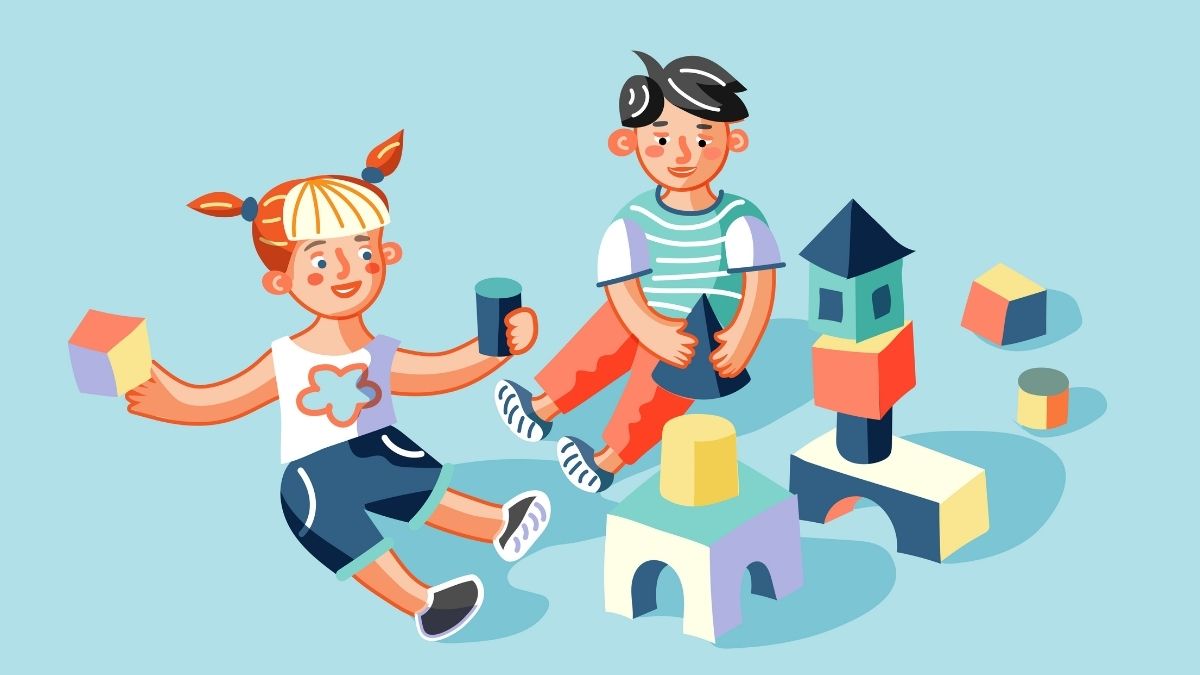
Creating projects scaled to developmental levels ensures children remain interested and successful without frustration. Younger children aged 6 to 8 might start with basic block stacking and creating simple shapes such as cubes and pyramids. Older children closer to 12 years old can take on more detailed construction like architectural models or learning about symmetry and scale through complex assemblies. Age-appropriate challenges also mean providing tools and materials that match fine motor skills, cognitive development, and attention span.
This graduated approach builds confidence step-by-step while introducing new concepts at accessible levels. For example, children who master simple construction moves naturally move towards understanding how different shapes combine to form more complex structures. By observing and supporting this progression, educators and parents optimize learning impact.
How does integrating creativity enhance learning?
Incorporating creative building projects, such as designing model houses or imaginary spaces, motivates children to apply geometry in personally meaningful ways. When kids connect shapes to real-world objects or creative concepts, they see the value and use of spatial thinking beyond the classroom. Creativity also encourages problem solving—children must figure out how to join pieces or balance structures, weaving math skills into artistic exploration.
This kind of learning taps into natural curiosity and fosters ownership of the process. I notice that children sustain engagement longer when projects include open-ended design choices rather than rigid instructions. Building models within imaginative contexts nurtures both technical understanding and self-expression, a balance critical for sustained interest.
What realistic actions can parents and educators take to support 3D geometry learning?
Practical steps include incorporating everyday building materials and playful model projects into daily or weekly routines. Parents can encourage kids to use household items like cardboard boxes, blocks, or recycled materials to explore shapes and constructions at home. Educators can create lesson plans with incremental model-building tasks and include simple challenges that develop spatial reasoning hands-on. Both can observe and ask children to describe their building process and discoveries to deepen reflection and language development.
How can simple materials create meaningful learning?
Materials like paper, tape, straws, clay, and wooden blocks are accessible and versatile tools for geometry exploration. Children do not need complex kits—using items around the home or classroom lowers barriers for engagement. For example, folding paper into nets for cubes or assembling straws into tetrahedrons demonstrates geometric principles clearly without expensive supplies. These materials also encourage creativity through remixing and customizing shapes.
Using familiar materials reassures both children and adults it is feasible to embed geometry learning in everyday settings. This supports continued practice beyond formal classes and helps children internalize spatial knowledge gradually. From my experience, kids often surprise adults with innovative uses of simple supplies when given freedom within learning goals.
What routines integrate model building into learning?
Setting aside dedicated time for hands-on building sessions each week offers consistency for skill development. This can be part of afterschool enrichment, homeschooling schedules, or incorporated into group instruction. Planning scaffolded activities where children build from one concept to the next ensures steady progression. Open-ended project days combined with focused challenges balance exploration with skill practice.
Interaction during these routines is critical; adults guiding children through asking questions about shape properties or encouraging problem-solving discussions deepen understanding. Creating a supportive environment where mistakes are seen as learning opportunities builds resilience and confidence in spatial reasoning. Such routines need not be lengthy but benefit from regularity.
How does discussing building projects improve learning outcomes?
When children explain their design choices and describe shapes they constructed, they practice articulating spatial ideas in language. This strengthens cognitive connections and clarifies their own understanding. Discussion also reveals misconceptions that adults can gently address. Peer sharing fosters collaborative learning and exposes children to diverse approaches and perspectives on similar geometry problems.
Encouraging reflection helps children move beyond assembling pieces to understanding why certain configurations work. In educational sessions, group critiques modeled on professional design reviews can nurture communication skills linked to geometry learning. I observe that children who regularly verbalize their spatial thinking tend to develop stronger reasoning capabilities overall.
How can professional guidance enhance hands-on geometry learning for kids?
Working with experienced educators or programs specializing in architecture and spatial learning can provide structure and expertise that maximize benefits of hands-on building. Professionals design age-appropriate curricula, balance creativity with fundamentals, and introduce terminology alongside practice effectively. This guided learning ensures children not only build models but also develop conceptual understanding connected with broader academic goals. For families in Miami, connections with local educational resources provide quality support.
What specialized programs offer focused spatial learning?
Programs like arKIDect integrate hands-on model building with lessons on geometry tailored for children aged 6–12. These programs combine creative projects with spatial thinking exercises and scaffold progression across age groups. Students receive mentorship from instructors familiar with developmental needs and pedagogical best practices. This specialized environment supports continuous skill development aligned with academic standards and creative expression.
Such programs often involve portfolio building, presentation skills, and design critique elements that help children connect 3D geometry to real-world design challenges. I find that children benefit greatly when learning experiences include both practical building and guided reflection under professional supervision.
How does expert feedback support learning?
Professional instructors observe children’s approaches and provide constructive feedback to improve techniques and deepen understanding. They help identify errors or gaps in spatial reasoning and suggest strategies to overcome difficulties. This personalized attention accelerates learning and builds confidence in tackling more complex projects. Feedback also encourages children to think critically about their work rather than simply completing tasks.
Additionally, expert guidance introduces children to a broad range of resources — from digital tools to advanced materials — expanding possibilities for geometry exploration. Structured environments create a safe space for experimentation and question asking, which fosters continuous curiosity and development.
Why collaborate with educational communities for sustained impact?
Collaboration with local schools, afterschool programs, and educational organizations fosters access to diverse learning opportunities and resources. Communities focused on architectural learning support sharing materials, exchanging ideas, and organizing events like exhibitions or group projects. This networked approach enriches children’s experiences beyond individual sessions or homes.
Regular participation in a community reinforces learning by connecting children with peers facing similar challenges and aspirations. For families in Miami and Sunny Isles Beach, engaging with established programs contributing to spatial education helps sustain motivation and achievement. I believe that well-coordinated collaboration creates an ecosystem where hands-on 3D geometry education thrives effectively.
If you want to learn more about how to integrate hands-on model building with professional support, you can find useful information about building creative portfolios for young learners, or explore details on enrollment options for expert-led programs in Miami. For personalized inquiries or guidance, please contact arKIDect directly.
Frequently Asked Questions
What age groups does arKIDect serve for 3D geometry learning?
arKIDect primarily supports children aged 6 to 12 with age-appropriate architecture education that includes hands-on 3D geometry modeling. Programs are designed to match developmental stages within this range, ensuring activities are accessible and engaging for beginner and intermediate learners.
Where are the hands-on geometry classes held in Miami and Sunny Isles Beach?
Classes and workshops take place in safe, child-friendly locations within Miami and Sunny Isles Beach, offering in-person environments where kids can actively participate in model-building projects. Availability may vary seasonally, and some virtual options might be offered depending on demand.
Are the 3D building classes designed for beginners?
Yes, the classes are structured to welcome beginners with no prior experience. They incorporate scaffolded challenges that build foundational skills while encouraging creativity, making them suitable for young children just starting to explore spatial concepts.
What types of hands-on projects do children complete in these programs?
Projects range from simple polyhedron constructions to complex architectural models, including creating nets for solid shapes, building geometric sculptures, and designing functional spaces. These activities reinforce understanding of geometric properties and relationships in tangible ways.
Are classes group-based or offered as individual sessions?
Programs typically include small group classes that promote collaboration and peer learning, enhancing social skills alongside spatial reasoning. Private sessions may be available for children who require personalized attention due to learning preferences or needs.


