Professionals in education and child development often note a recurring challenge: children struggle to find common ground when working in groups on creative projects. This difficulty can slow progress and reduce the quality of the final outcome. Such problems also affect schools and afterschool programs aiming to foster collaboration through hands-on activities. These environments must balance encouraging individual creativity with guiding children toward meaningful cooperation, sometimes encountering obstacles in teaching effective compromise during group activities like design or building projects — a key skill that supports long-term social and learning success, as explored in various approaches to enhance logical thinking development.
Understanding why children find it hard to compromise during group creative work requires recognizing that this is more than a social hiccup; it reflects real developmental stages in managing conflict and negotiation. In my experience working with youth, I see architecture education as a practical framework that naturally introduces children to negotiating ideas and solving problems together, helping them build patience and communication skills alongside creativity. Positioning compromise not as a loss but as a shared gain can shift the group dynamic and support deeper learning and connection.
Key Points Worth Understanding
- Compromise is a learned skill that develops through practice in real group settings.
- Children’s differing ideas in creative projects are natural but need structure to become productive.
- Guidance and modeled behavior contribute significantly to children’s ability to resolve conflicts.
- Group activities that encourage open communication help children understand others’ perspectives.
- Teaching compromise in creative contexts supports social skills applicable beyond the classroom.
What obstacles do professionals face in teaching compromise during creative group work?
Many educators and program leaders find that when children collaborate on creative projects, conflicting opinions frequently stall progress. This is especially evident in tasks requiring design decisions where personal preferences can be strong, such as model building or artistic choices. Children are still developing impulse control and empathy, which makes spontaneous compromise challenging without adult support. Additionally, time constraints and pressure to complete projects can limit opportunities for reflective discussion, making conflicts harder to navigate constructively.
Why do children resist compromise in creative settings?
Children often see their ideas as extensions of themselves, which can make accepting alternatives feel like personal rejection. For example, when designing a structure together, a child may feel upset if others suggest a different color scheme or layout. This emotional connection to creative choices means that compromise requires managing feelings alongside logical discussion. As a result, children may cling to their preferences even if another option is better for the group outcome, finding it difficult to separate identity from the shared project.
Moreover, children’s skill in perspective-taking is still developing at different rates, so understanding why others suggest certain ideas does not come naturally. Without this understanding, cooperation can feel like competing against peers rather than collaborating. Adults might notice that conversations become dominated by those who speak louder or longer, overshadowing quieter children with equally valid contributions.
What role do adult facilitators play in managing group creative conflicts?
Educators and facilitators act as guides who can help children navigate conflict by setting expectations and providing communication tools. For instance, a teacher might introduce ground rules for listening respectfully and encourage children to explain their ideas clearly instead of reacting emotionally. This helps transform conflicts from barriers into learning moments. Facilitators also observe group dynamics and may intervene to balance participation so no voices are lost.
Additionally, adults modeling compromise by verbalizing their decision-making process demonstrates that conflicting preferences can be resolved without giving up one’s perspective entirely. When facilitators encourage children to ask questions about others’ ideas and build on them, they foster an environment where creative conflict becomes constructive. Such guidance makes compromise less about winning or losing and more about arriving at a shared, better outcome.
Why do time pressures exacerbate difficulties with compromise?
When projects require completion within limited time frames, children may prioritize finishing over understanding, leading to rushed decisions or disputes. Under pressure, impulse control diminishes, and children might push harder for their ideas instead of negotiating. This haste can also reduce patience for others’ suggestions and increase frustration.
In these cases, facilitators might notice that children default to quick voting or majority rule rather than discussing differences fully. While such shortcuts can move the project forward, they may also undercut the value of compromise by not addressing the reasons behind disagreement. This pattern underscores the importance of building in space for reflection and dialogue during group work, even when schedules are tight.
Why do these challenges persist in group creative learning environments?
Compromise can be difficult to teach because it involves complex emotional and social skills that develop over time. Children often need repeated, supported experiences to gradually build confidence in negotiation. Without consistent opportunities to practice, skills like listening, perspective-taking, and managing frustration remain underdeveloped. This explains why problems in group compromise frequently recur across ages and settings.
How do individual differences affect learning compromise?
Each child brings unique temperament, communication style, and prior social experiences to the group, influencing how they handle conflict. For example, some children may be naturally assertive, while others are more reserved—affecting whose ideas get heard and how compromises are reached. Recognizing these differences is crucial because uniform approaches may fail to engage all participants equitably. Tailoring support to diverse needs helps create inclusive environments where everyone can contribute to compromises.
In practice, educators might use small group activities or pair work to ease social pressure and help quieter children build confidence. Providing consistent vocabulary and frameworks for expressing opinions also supports children who struggle to articulate their thoughts clearly, leveling the playing field for collaboration.
What cultural or environmental factors influence persistent challenges?
Children’s experiences outside of school shape their approach to conflict and cooperation. Families and communities vary in how they model negotiation and express disagreement, which influences children’s default strategies in group situations. For instance, children from homes where compromise is rarely practiced may find it unfamiliar or uncomfortable.
School and program environments that do not explicitly value or teach collaborative skills can also contribute to ongoing difficulties. Without clear expectations and structured practice, children may rely on competition or dominance as strategies. Understanding this context reminds facilitators to approach compromise education as building new habits rather than expecting instant change.
Why do traditional curricula often overlook teaching compromise explicitly?
Standard academic programs typically prioritize individual achievement and content mastery, leaving social skills like compromise less emphasized. Especially in creative subjects, assessment focuses on end products rather than the process of collaboration. This limits formal teaching about negotiation and teamwork. Consequently, children often learn compromise informally, through social interactions rather than guided instruction.
Integrating explicit lessons on compromise requires shifts in curriculum design, teacher training, and resource allocation. While some progressive programs experiment with collaborative models, widespread adoption remains limited. This gap suggests the need for practical strategies and tools that educators can use within existing structures to support teamwork skills meaningfully.

What do practical approaches to teaching compromise in creative groups look like?
Effective methods combine clear expectations, supportive communication techniques, and opportunities for reflection. Practical solutions include establishing group norms that value every voice and encourage respectful listening. Facilitators might introduce structured dialogue routines, such as “think-pair-share” or using talking objects to manage turn-taking. These protocols give children a safe framework to express ideas and negotiate differences.
How can project design support learning compromise?
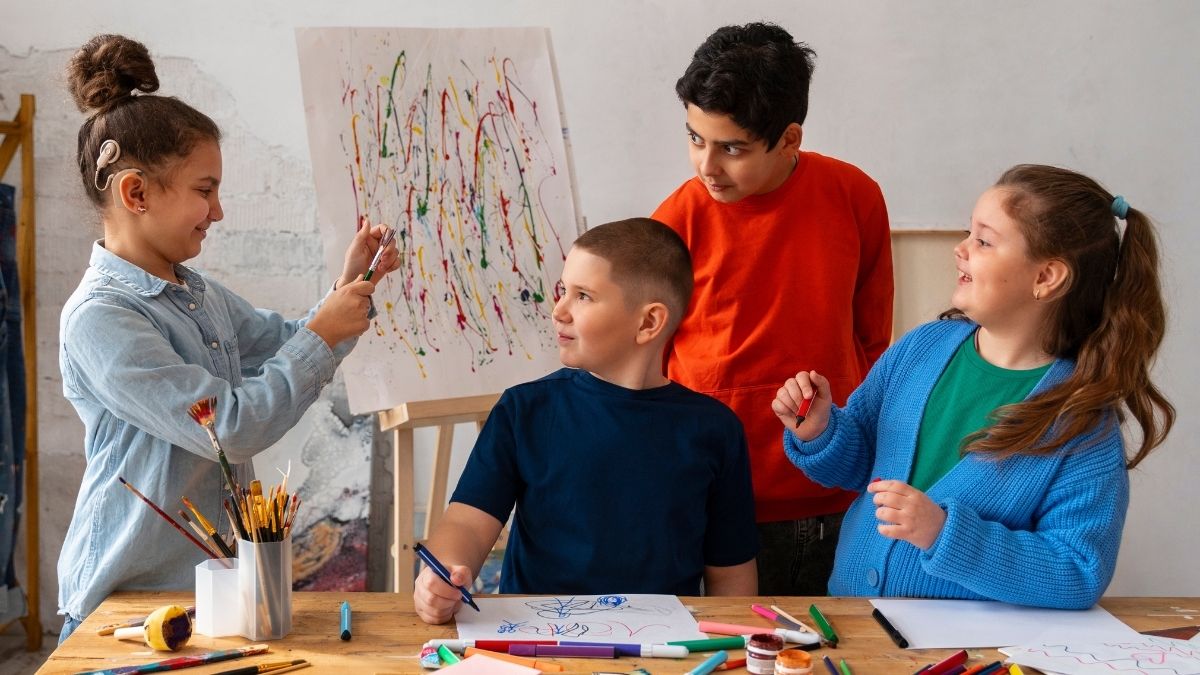
Choosing group creative activities that require genuine collaboration and interdependence helps children experience the need to compromise naturally. For example, projects where roles complement each other, such as designing different parts of a model that must fit together, emphasize teamwork. This design encourages children to communicate and adjust plans collectively rather than work in isolation.
Additionally, using open-ended tasks without a single correct solution invites multiple ideas and discussion. This reflects real-world creative processes where compromise leads to innovative outcomes. When children see how combining ideas improves the final product, they gain motivation to engage in negotiation.
Why is teaching communication skills fundamental?
Compromise depends on children being able to express their preferences and listen to others effectively. Practical instruction focuses on vocabulary for feelings and ideas, phrases for agreeing and disagreeing respectfully, and recognizing nonverbal cues. Role-playing exercises can help children practice these skills in low-stakes settings before applying them in group projects.
Clear communication reduces misunderstandings that often escalate conflicts. When children feel heard and understand others’ viewpoints, they are more willing to find middle ground. Fostering empathy alongside verbal skills strengthens this willingness and contributes to positive group dynamics.
What role does reflection play in learning to compromise?
After group activities, guided discussions where children reflect on how disagreements were handled deepen their understanding. Facilitators can ask questions like, “What helped your group solve differences?” or “How did you feel when you shared ideas?” This metacognition supports children in internalizing effective behaviors.
Reflective practices also identify areas needing improvement and provide feedback loops for facilitators to adjust support. Over time, this continuous learning fosters more confident and skilled negotiators who see compromise as a constructive part of teamwork.
What realistic actions can educators and parents take to support children learning compromise?
Adults can create environments that encourage risk-taking and learning from mistakes during collaboration. Setting clear intentions for group work helps children know what success looks like beyond just completing a task—such as demonstrating respectful discussion or joint decision-making. Providing consistent reinforcement of positive behaviors supports habit formation.
How can adults model effective compromise behavior?
Children learn a great deal by observing how adults handle disagreements calmly and find solutions together. Parents and educators can narrate their thought process aloud during conflicts to demonstrate reasoning and respect. For example, explaining why they might adjust a plan after hearing another’s suggestion signals that compromise is normal and valuable.
Modeling includes showing patience, acknowledging mistakes, and celebrating joint achievements. This transparency builds trust and encourages children to emulate these patterns in their groups.
What techniques can be used to scaffold children’s negotiation skills?
Structured exercises such as guided negotiations with clear rules and roles help children practice step-by-step. Using visual aids like decision charts or pros and cons lists can make abstract ideas concrete. Peer mediators or facilitators can support children in managing disputes constructively during activities, providing immediate feedback.
Gradually reducing adult involvement as children gain confidence promotes autonomy and ownership over compromise skill development. Consistency in applying these techniques across settings reinforces learning.
How can parents extend learning beyond the classroom?
Families can encourage cooperative play at home, involving children in decisions about shared activities or responsibilities. Discussing examples of compromise in daily life, such as choosing a game or meal, shows children the relevance of these skills. Parents might also involve children in planning community or group events where collaboration is required.
Sharing stories about times they negotiated successfully or faced challenges helps children connect personal experiences to broader teamwork concepts. Small moments at home become meaningful practice for lifelong skills.
In what ways can professional guidance improve teaching compromise in group creative activities?
Experts in child development and education design curricula and training that incorporate proven strategies for collaborative learning. Professional facilitators bring experience in managing group dynamics that optimize children’s engagement and growth. Partnering with specialized programs can provide tailored support for educators seeking to include structure and tools for compromise learning, much like the comprehensive resources available for teaching STEM concepts through hands-on projects with LEGO and engineering.
What benefits arise from professional development for educators?
Training helps educators recognize common pitfalls and learn new techniques for guiding creative conflict toward positive outcomes. It also offers opportunities to practice interventions and receive feedback, increasing confidence in managing diverse groups. Educators equipped with these skills create more inclusive classroom cultures that value every child’s contribution.
Additionally, professional development emphasizes the importance of embedding social-emotional learning alongside academic goals. This alignment supports holistic child development and better long-term retention of teamwork skills.
How do structured programs support children’s growth in compromise?
Programs designed around project-based learning often include protocols and materials that scaffold collaborative skills explicitly. These programs integrate negotiation into creative challenges, making compromise a learning objective rather than an incidental outcome. For instance, architecture education programs focusing on group design projects offer authentic contexts for practicing teamwork and problem solving.
By working with such programs, educators and families access proven frameworks and resources that address children’s needs at different developmental stages. This guidance makes teaching compromise more intentional and effective.
Why is ongoing assessment and feedback important?
Regular observation and evaluation of children’s interactions provide insight into their progress in compromise skills. Professionals can use this information to adjust instruction methods and group compositions to maximize growth opportunities. Feedback to children framed positively encourages continued effort and builds resilience.
Without systematic assessment, challenges in collaboration may go unnoticed or unresolved, limiting children’s potential to develop these critical skills. Thus, professional involvement enhances accountability and continuous improvement.
Learning how to compromise in group creative activities is a multifaceted process that benefits from thoughtful approaches and informed guidance. Strategies that combine structured communication, supportive environments, and reflective practices help children navigate creative conflicts effectively. When adults provide modeling, tools, and ongoing feedback, children gain valuable social skills that extend far beyond the project at hand.
For those interested in further exploring ways to support children’s collaborative and critical thinking development, resources on critical thinking through design projects offer practical insights. To discuss how to implement effective group learning experiences, contacting experienced educators remains a reliable next step for personalized guidance.
Frequently Asked Questions
How can I encourage my child to be more open to compromise during group projects?
Encouragement starts with discussing the value of listening to others and trying new ideas. Role-playing scenarios at home where your child practices expressing preferences politely and hearing different viewpoints can build confidence. Praise efforts to cooperate and highlight how combining ideas can lead to stronger results. Providing positive reinforcement and modeling respectful disagreement also helps internalize compromise as a useful skill.
What are some signs that children need support in learning to compromise?
Signs include frequent conflicts that disrupt group progress, children insisting on their way without consideration, or withdrawal from group discussions. Difficulty expressing ideas clearly or reacting strongly to disagreement also indicates a need for support. If children seem frustrated or disengaged during group creative activities, targeted intervention through guided communication and reflection can be beneficial to develop cooperation skills.
How can afterschool programs incorporate lessons on compromise effectively?
Afterschool programs can integrate compromise lessons by designing projects that require shared decisions and collective problem solving. Establishing group agreements and teaching communication techniques at the start sets a foundation. Facilitators should observe interactions, stepping in to mediate when needed and encouraging reflection at the project’s conclusion. Repeated practice in a supportive environment helps children gain confidence and competence.
Is it normal for children to struggle with compromise at different ages?
Yes, children’s ability to compromise develops in stages aligned with their cognitive and emotional growth. Younger children may find it especially hard as they are naturally egocentric and still learning perspective-taking. As children mature, they improve in managing emotions and understanding others’ points of view. Expecting gradual progress and providing age-appropriate support helps make challenges manageable and growth steady.
What role does emotional regulation play in successful compromise?
Emotional regulation helps children stay calm and think clearly during disagreements, preventing escalation into arguments. When able to manage emotions, children listen more openly and express themselves constructively. Teaching techniques like deep breathing or pausing before responding can improve regulation. Supporting children’s emotional skills directly contributes to more effective and lasting compromises in group settings.