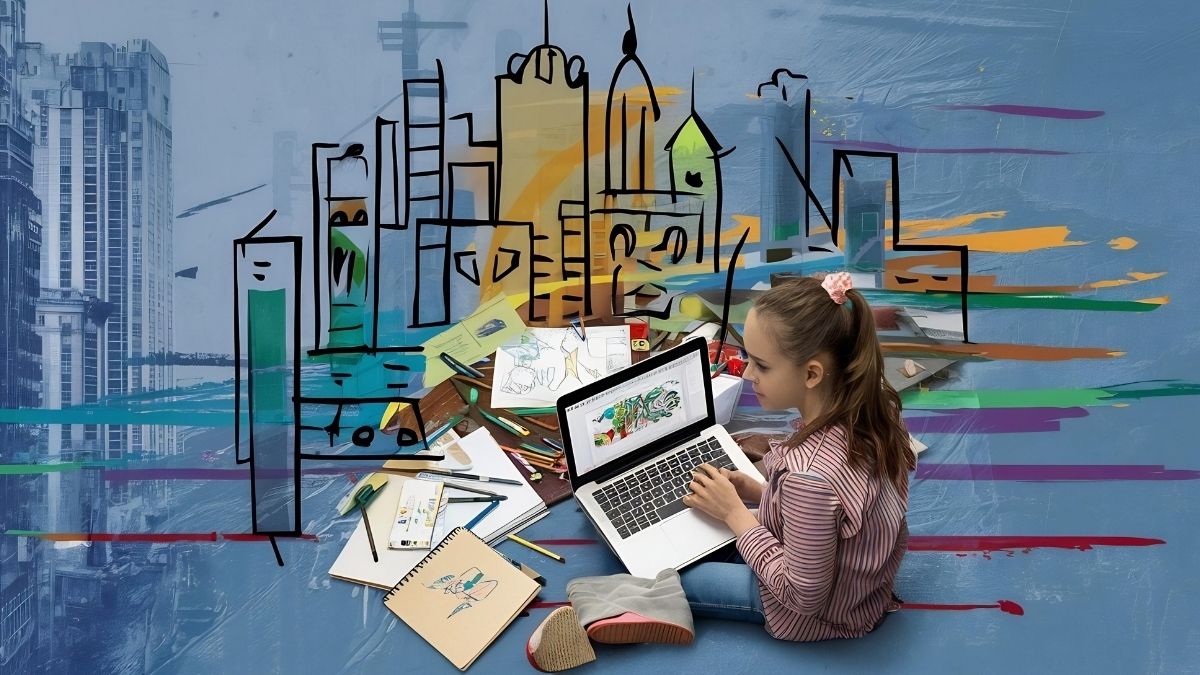
Young learners aiming to navigate the DASH interview often encounter a significant challenge: articulating their design process clearly and confidently. Professionals preparing students for such competitive arts programs notice that many children struggle not only with the creative aspects of their projects but also with explaining the reasoning behind their design choices. This communication gap hinders their ability to convey their work’s depth and intention effectively. Without clear expression, even well-executed projects may fail to demonstrate the learner’s full potential or understanding, affecting their chances during crucial assessments like the DASH interview. arKIDect addresses this problem by fostering skills that help kids verbalize their design journey, bridging the gap between creation and explanation, much like what is described in how arKIDect’s group critiques prepare kids for the DASH interview and presentation.
Understanding why explaining design choices remains a persistent challenge requires looking beyond surface difficulties. Children often find it hard to connect their creative instincts with language that accurately reflects their reasoning. This issue is compounded by a lack of structured practice within traditional school settings, where verbal presentation of design thinking may not be systematically developed. By clarifying this problem and exploring practical solutions, educators and parents can better support kids in preparing for the DASH interview. From my experience working with children, I see architecture education as a valuable tool in developing not only design skills but also the confidence to explain those ideas thoughtfully.
Key Points Worth Understanding
- Clear explanation of design decisions is a distinct skill separate from creativity.
- Many young learners lack opportunities to verbalize their creative thought process.
- Structured guidance supports children in organizing and communicating design ideas.
- Practice in group settings enhances confidence and clarity in presentations.
- Integrating explanation skills into design education improves DASH interview readiness.
What difficulties do children face when asked to explain their design process?
Children often find it challenging to translate their design ideas into words. This difficulty can stem from an underdeveloped vocabulary for architectural concepts and limited experience in discussing their creative choices aloud. Many kids have a strong intuitive understanding of design but struggle to articulate why they made specific decisions or how their design responds to a problem. In preparation for interviews like DASH, this gap may result in presentations that feel unfocused or incomplete to evaluators, despite promising project outcomes.
Why is explaining design different from simply showing the work?
Showing a design allows observers to see the final outcome but does not necessarily convey the reasoning behind it. The interviewers at DASH look for insight into the designer’s thought process, problem-solving approach, and ability to reflect critically on their work. Explaining design requires organizing thoughts clearly, sequencing ideas logically, and choosing language that reflects intention and understanding. This is a learned skill, not an automatic extension of creating the design itself, so it requires dedicated attention.
For example, a child might build an interesting structure but may initially say only, “I made a house,” without detailing the choices around scale, materials, or function. Learning to elaborate on these choices helps demonstrate deeper engagement and awareness and distinguishes candidates during interviews.
How do children’s communication skills impact their DASH interview results?
When children struggle to explain their design process, it can obscure their actual abilities and creativity. Interview panels rely heavily on verbal explanation to assess not only talent but also critical thinking and design understanding. Poor communication may cause evaluators to underestimate the child’s skills or misinterpret the project’s intentions. This concern often arises in competitive selection settings like DASH, where many applicants show strong visual work, making the ability to explain one’s process a key differentiator.
In addition, the confidence that comes from articulating ideas clearly often influences overall presentation demeanor. Nervousness or lack of preparedness to speak about design can affect body language and eye contact, all of which subtly shape the impression of the candidate’s readiness for the program.
What role do parents and educators play in developing these explanation skills?
Parents and educators act as primary supporters for children learning to explain their design thinking. Encouraging questions that prompt reflection—such as “Why did you choose this shape?” or “What problem does your design solve?”—helps kids connect practical decisions to larger ideas. Consistent opportunities to talk about projects in a low-pressure environment build familiarity and ease with the process.
Moreover, educators skilled in guiding children through critique sessions and iterative discussions create safe spaces where learners can experiment with expressing their ideas without fear of judgment. These interactions form the foundation for clear and confident presentations during formal interviews like DASH.
Why do these difficulties in explaining design persist among young learners?
One reason this challenge remains is that verbalizing creative process is a skill often overlooked in mainstream education. Standard curricula do not always emphasize reflection or communication about making, leaving many children without structured practice. Additionally, young learners may lack the language development related to design concepts due to limited exposure or specialized instruction.
How does traditional schooling fail to address design communication?
Traditional classrooms frequently prioritize product over process, focusing assessment on final outcomes more than the thinking behind them. Discussions about how and why children make design decisions are sometimes informal or absent. Without guided reflection and presentation tasks, children miss out on developing a clear language around their creative work.
For example, in many art or design classes, children complete projects for display but do not engage in explaining their choices to peers or teachers. In these contexts, presentation skills remain underdeveloped, which becomes evident in settings like DASH.
What impact does limited vocabulary have on explaining design work?
Young learners’ restricted vocabulary specifically related to architecture and design creates another barrier. When children lack terms for materials, spatial relationships, or functions, explaining complex decisions becomes difficult. This linguistic gap discourages detailed responses and leads to reliance on general or vague descriptions.
For instance, a child might refer to “big shapes” or “fun colors” without connecting those observations to client needs, environmental factors, or user experience—all critical factors evaluators consider in interviews. Expanding vocabulary within the context of active project work is essential to overcome this obstacle.
How do emotional factors like anxiety influence children’s explanations?
Interview settings can cause stress that affects children’s ability to organize and express their thoughts clearly. Nervousness, fear of making mistakes, or unfamiliarity with formal questioning can all inhibit effective communication. Without prior practice in controlled environments, these emotional hurdles persist and impact performance.
Providing children with supportive coaching and simulated interview experiences reduces anxiety by building familiarity. Gradual exposure to explaining designs aloud in non-threatening contexts strengthens resilience and presentation skills needed for DASH.

What practical methods help children learn to explain their design process?
Successful approaches combine hands-on creation with structured reflection and language development. arKIDect integrates these elements through guided activities that prompt students to describe, analyze, and justify each step of their work. By embedding explanation practice within making, children learn to connect doing with articulating.
What does guided reflection look like in practice?
Guided reflection involves the instructor asking targeted questions during and after design tasks. Questions such as “What problem are you solving?” or “How does this choice affect the user?” encourage thoughtful consideration. These prompts not only improve verbal expression but also deepen design understanding.
Repeated cycles of creating, reflecting, and revising help internalize the connection between process and explanation. For example, children might be asked to write or verbally summarize their decisions, then receive feedback to refine clarity.
How do group critiques enhance explanation skills?
Group critique sessions provide opportunities for learners to present their work to peers and hear diverse perspectives. This collaborative format encourages children to practice explaining under real conditions and develop confidence. Receiving constructive feedback also motivates clearer expression and critical thinking.
Children learn to listen actively, respond thoughtfully, and adjust their presentations, all of which prepare them for interviews like DASH. These dynamics are described in detail through arKIDect’s group critique methods that prepare kids effectively for presentation challenges.
What role do vocabulary-building activities play?
Explicit teaching of design-related terms bridges the language gap. arKIDect incorporates vocabulary exercises linked to project contexts, helping children recognize and apply relevant words naturally. This approach strengthens children’s ability to describe spatial properties, materials, and functions.
For instance, while working on an architectural model, children learn terms like ‘scale,’ ‘foundation,’ or ‘function’ and use them when explaining their decisions. This familiarity makes verbal explanations more precise and credible during interviews.
What realistic steps can parents and educators take to support this skill development?
Parents and teachers can create environments encouraging frequent discussion about design choices beyond simply completing projects. Setting aside time to ask open-ended questions, practicing mock presentations, and providing gentle feedback help kids grow comfortable with articulating their thoughts. For families in Miami, local resources like afterschool programs offer structured opportunities for development.
How can parents encourage design explanation at home?
Parents can foster a habit of reflective dialogue by engaging children in conversations about their creative activities. Questions focused on ‘why’ and ‘how’ prompt children to think beyond making and share insights. Keeping discussions supportive rather than corrective encourages exploration and confidence.
For example, parents might ask, “What made you decide to use this color?” or “How does this part work in your design?” Such exchanges deepen understanding and prepare children for formal interviews without pressure.
What should educators incorporate into classroom or program routines?
Educators can embed explanation practice through regular presentation opportunities and structured peer feedback. Designing lessons with components that require students to verbalize their ideas ensures this skill develops alongside making. Using rubrics that value clarity and reasoning further reinforces its importance.
Peer-to-peer presentations, small group discussions, and portfolio reviews become natural parts of learning, making interview preparations like for DASH less daunting. These practices align with effective methods seen in model-making projects to strengthen DASH portfolios.
What local options provide professional guidance for children preparing for DASH?
Specialized programs around Miami and nearby areas offer targeted coaching tailored to the DASH audition requirements. These programs combine design instruction with communication skill development in age-appropriate ways. arKIDect, for instance, integrates hands-on projects with presentation practice to build both skills concurrently.
Engaging with such programs gives children access to educators experienced in DASH expectations, reducing uncertainty and increasing preparedness. For parents, knowing where to find these resources locally makes practical support more accessible.
How does professional guidance improve a child’s ability to explain their design process for DASH?
Professional guidance provides structured practice, clear standards, and expert feedback that informal learning cannot match. Coaches and instructors understand the nuances of the DASH interview and tailor training to address common challenges. They create opportunities for repetition, reflection, and refinement—key elements for mastering explanation skills.
What benefits do expert instructors bring to the learning experience?
Instructors specializing in design education know how to break down complex communication skills into manageable steps for children. They introduce vocabulary gradually, model clear explanations, and provide constructive feedback that builds confidence. Their experience allows them to anticipate difficulties and adapt lessons to individual needs.
This personalized approach ensures that children not only understand what is expected but also develop a mindset of thoughtful expression, essential for success at DASH interviews.
How do professional programs replicate real interview conditions?
Mock interviews and presentation rehearsals simulate the DASH environment, giving children a practical sense of what to expect. These rehearsals reduce anxiety by familiarizing children with questioning styles and time constraints. Feedback during these sessions focuses on clarity, pacing, and confidence.
Such realistic practice increases children’s readiness and helps transform abstract expectations into relatable tasks. Over time, learners show noticeable improvements in communication fluency and poise.
What measurable improvements can families expect from guided coaching?
Families typically observe enhanced vocabulary use, clearer organization of ideas, and increased comfort speaking about design work. Children become better at linking decisions to underlying principles and explaining these connections simply. These improvements translate into stronger performances not only for DASH but also in broader academic and social contexts.
Working with professionals also builds motivation by providing tangible goals and recognition of progress, encouraging continued development beyond immediate interview needs.
Integrating controlled opportunities to practice describing the design process as emphasized in model-making projects strengthening DASH portfolios supports a comprehensive approach. Balancing hands-on skills with verbal articulation rounds out preparation.
For customized support or inquiries about programs designed to enhance your child’s interview skills and design communication, you can contact arKIDect directly for guidance.
Overall, arKIDect’s focus on teaching kids to explain their design process addresses a commonly overlooked component of DASH preparation. This skill complements creative development and helps children present themselves as thoughtful, articulate candidates. Through practice and professional coaching, children gain the tools to express their design thinking clearly—an asset throughout their educational journey.
Frequently Asked Questions
What age groups does arKIDect serve for teaching design explanation?
arKIDect offers age-appropriate programs generally serving children from elementary through middle school. Instruction is tailored to developmental levels, with younger kids introduced to basic reflection and older learners engaging in more complex verbal presentations.
Do arKIDect classes include practice specifically aimed at the DASH interview?
Yes, classes integrate presentation and explanation exercises aligned with DASH requirements. Children are guided to articulate their design process through both individual and group activities that simulate interview scenarios.
Are the classes held in-person or available online around Miami?
arKIDect primarily offers in-person sessions in the Miami area, including afterschool and enrichment locations convenient for families seeking hands-on learning. The program’s local presence supports community connection and live interaction.
How do group sessions help children improve their design explanations?
Group sessions provide structured environments where children present their work to peers, receive feedback, and learn from others’ questions. This shared experience builds confidence and communication skills essential for interviews like DASH.
What types of projects do children complete to practice explaining their design process?
Projects typically involve architectural model building, drawing, and design challenges that require decision-making linked to real-world problems. These tangible projects anchor verbal explanations in concrete experiences, making practice relevant and effective.